

From 1 January 2027, recombinant factor C is an official Ph. Eur. method for bacterial endotoxins. The harder question for QC labs: what can be automated, and what still can’t?
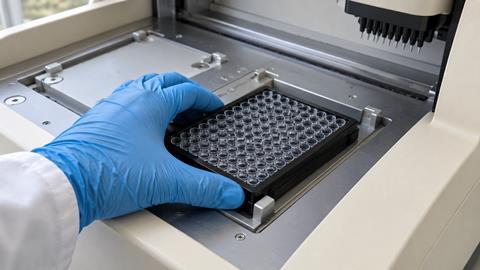
The bacterial endotoxins test is run on water, in-process samples and injectable products at batch release. In many QC labs much of it is still done by hand: preparing standards, making serial dilutions, loading plates and transcribing results. Each manual step is a chance for an invalid run, an investigation and lost analyst hours.
The case for recombinant reagents has largely been made. Recombinant factor C has been method G of Ph. Eur. chapter 2.6.14 since 1 January 2027, USP <86> has been official since May 2025 and the FDA revised its pyrogen and endotoxins guidance in March 2026 to accommodate recombinant reagents. A change of method is the natural point to redesign the workflow around it. But automation is not plug and play. The choice of platform is tied to the choice of reagent, some steps still need an analyst and the robot needs qualifying in its own right.
In this EPR virtual panel, leading practitioners compare their experience of automating recombinant endotoxin testing in manufacturing QC. They will discuss which steps can run unattended, how plate-based liquid handlers, cartridge robots and benchtop pipetting systems compare, what qualification and data integrity demand, and where the payback comes from. The discussion starts from the point where the decision to use recombinant reagents has been taken.
What you’ll learn:
-
Automation limits: which steps of a recombinant endotoxin test can run unattended today, and which still need an analyst
-
Platform choice: how plate-based liquid handlers, cartridge robots and benchtop pipetting systems compare, and how each ties you to a reagent type and its compendial status
-
Qualification and data integrity: what it takes to qualify an automated workflow for GMP release and water testing, from the robot to LIMS transfer and audit trails
-
Business case: where to look for payback in analyst time, invalid runs, reagent use and turnaround, and the sample volume at which a robot makes sense
Who should attend?
QC microbiology managers, endotoxin and pyrogen testing specialists, sterility assurance and QA leads, AS&T and MSAT method owners and lab automation leads at sterile, biologics and vaccine sites and CDMOs. Particularly relevant to labs that have moved to recombinant reagents, or plan to, and need to handle routine sample volumes.
Register free to hear how other QC labs have automated recombinant endotoxin testing and to put your questions to practitioners with first-hand experience of implementing these workflows in manufacturing QC.
Interested? Register Now
Is the panel discussion free?
Yes – there is no charge to watch the panel discussion, either live or on-demand.
When will the panel discussion take place?
The webinar will be taking place on 3rd February 2027.
Can I watch it later?
The panel discussion will become available to watch on-demand shortly after the live webinar takes place.
What are the benefits of attending live?
You’ll be able to ask the speakers your questions, which will be answered live in the Q&A towards the end of the session.
How long will the panel discussion be?
This panel discussion will last up to an hour.
What do I need to watch this panel discussion?
All you need is a computer with an internet connection. We recommend using headphones if possible if you’re in an office environment.