



Bioprocessing and biomanufacturing focus
Latest
 Article
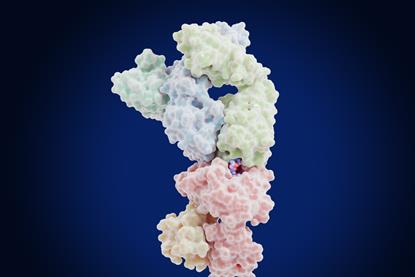
Strategies for scaling complex next-generation biologics
As biologic drug formats grow more sophisticated, scalable success depends on embedding manufacturability, analytics and quality thinking into molecular design from the very beginning of development.
 Report
Pharma Horizons: Formulation
Discover the key technologies, risk mitigation strategies and development considerations shaping modern pharmaceutical formulation — from early-stage selection through to commercial-scale manufacturing.
 Article
Building the pharmaceutical facility that is ready for change
As pharmaceutical manufacturing becomes more complex and responsive, Andy Lynam, Country Sales Manager at Rockwell Automation, explains why the Facility of the Future depends on connecting production, quality and data around a flexible digital operating model.
Featured

Article
Why authenticity is key for biopharma leaders
Drawing on more than 20 years in the industry and a few unexpected lessons, CPHI Awards 2026 – Woman of the Year finalist, FUJIFILM Biotechnologies’ President and Chief Operating Officer Maja Pedersen, reflects on how leading as your authentic self produces better outcomes for teams, organisations and patients.

Article
European Pharmaceutical Review Issue 2 2026
EPR Issue 2 includes articles on manufacturing, drug formulation, microbiology, downstream bioprocessing, and more.
Webinars
- Previous
- Next













Whitepapers
- Previous
- Next










Join now
Unlock exclusive industry insights
- Bookmark articles and resources to access anytime
- Enjoy free access to industry leading resources, webinars and insights
- Stay informed with the latest news and breakthroughs in drug discovery
- Receive updates and recommendations tailored to your research interests
More bioprocessing and biomanufacturing
- Article
Building the pharmaceutical facility that is ready for change
As pharmaceutical manufacturing becomes more complex and responsive, Andy Lynam, Country Sales Manager at Rockwell Automation, explains why the Facility of the Future depends on connecting production, quality and data around a flexible digital operating model.
 Article
European Pharmaceutical Review Issue 2 2026
EPR Issue 2 includes articles on manufacturing, drug formulation, microbiology, downstream bioprocessing, and more.
 Article
Pharma plants cannot be designed and built like at the start of the century
In this interview, Adam Cross from Octave explains why pharma construction and information management can no longer be siloed activities, and advises how companies can hit the ground running from design through to operations.
 Report
CPHI Milan 2026 preview: key themes and emerging trends
Explore seven expert perspectives on the technologies and challenges shaping the future of pharmaceutical development and manufacturing.
 Article
Testo at CPHI 2026 in Milan: digital monitoring for the pharmaceutical industry
At CPHI 2026, Testo will showcase digital solutions for monitoring, compliance, and supply chain transparency in the pharmaceutical industry.
 Opinion
What will shape the future of advanced therapies in Europe?
Following his opening keynote at this year’s Advanced Therapies Europe conference in Barcelona, Professor Jacob George, MHRA Chief Medical & Scientific Officer, explores the evolving regulatory landscape for advanced therapy medicinal products.
 Opinion
How can we ensure consistency in decentralised cell therapy manufacturing?
Following her presentation at Advanced Therapies Europe, Charlotte Serra navigates the complexities of decentralised cell therapy manufacturing.
 Article
Precision control for target protein degraders
Target protein degraders offer therapeutic potential, yet their high potency, poor solubility and ultra-low administered doses place significant demands on formulation science, analytical capability, containment and scalable manufacture. Successful development requires solubility enhancement, particle engineering, excipient design, high-potency containment and process development to be considered together from the earliest programme stages.
 Article
Nitrosamines: from detection to understanding
Manufacturers are facing a new generation of nitrosamine challenges as NDSRIs demand more sophisticated analytical and risk management strategies.
 Article
To grow, pharma manufacturers need operations that scale - not just acquisitions
As patent cliffs threaten hundreds of billions in drug revenues and M&A activity reshapes the industry, the companies best placed to capitalise on pharma’s great reshuffling will be those that have standardised their manufacturing operations, unified their asset management and integrated quality systems capable of satisfying an increasingly demanding multi-regulator environment.
 Article
Redefining the standard for recessed lighting in the pharmaceutical industry
Pharmaceutical and chemical manufacturing facilities present some of the most demanding lighting challenges in industry, combining explosive atmospheres, stringent hygiene requirements and complex regulatory requirements. Raytec examines how explosion-protected LED solutions are redefining safety, performance and compliance across hazardous area applications.
 Article
Closing the data integrity gap in pharmaceutical quality control
Pharmaceutical quality control laboratories face growing pressure to strengthen data integrity as regulators scrutinise incomplete records, manual data entry, and disconnected systems.
 Article
Transforming mycoplasma testing for faster biotherapeutic quality control
As biotherapeutic manufacturing accelerates, rapid PCR-based methods are enabling manufacturers to detect mycoplasma contamination sooner. However, realising their full potential requires robust validation, risk-based implementation and integration with a wider contamination-control strategy.
 Article
CHO perfusion model lifts yield by letting cellular waste build up
A hybrid model built into commercial software and running a self-driving bioreactor has found that unmeasured cellular waste, not the usual metabolites, throttles perfusion yields.
 Report
Pharma Horizons: Nitrosamines
EPR’s 2026 nitrosamines report covers the key developments in manufacturing, quality, regulation, analytical development and beyond.