
Closed-loop backing paper recycling enables manufacturers to convert release liner waste into circular materials without modifications to existing printers or labellers, meanwhile ensuring EU packaging waste regulation compliance.
Sustainability initiatives in pharmaceutical manufacturing have traditionally focused on primary containers, secondary packaging materials and shipping logistics. However, relatively little attention has been paid to the materials consumed and discarded during the packaging process itself. One example is the backing paper of conventional labels, known as a ‘release liner’, which is discarded during the labelling process. Where small containers – such as ampoules, vials and eye-drop containers – are labelled at high speeds, liner paper is continuously generated, much of it being disposed of as industrial or general waste.
This issue highlights a structural disconnect between sustainability goals and the reality of operations on production lines operating under good manufacturing practices (GMP). Because release liners have a low unit weight, they tend to be excluded from mainstream material flow management and environmental reporting frameworks. Consequently, even at manufacturing sites with mature environmental initiatives, the disposal of release liners is frequently overlooked.
The hidden challenges of sustainability
Conventional release liners consist of composite materials such as paper/polyethylene resin laminate/silicone-based release coating or paper/silicone-based release coating. Since these are all composites of paper and resin they are difficult to recycle, thus the vast majority have traditionally been disposed of or incinerated. It is estimated that across the Japanese manufacturing sector, approximately 1.39 billion m2 of label backing paper is discarded or incinerated annually, demonstrating that waste which may appear insignificant on individual production lines accumulates to a scale that cannot be ignored.
release liners have not been clearly positioned as a ‘material subject to management’ nor been incorporated into decarbonisation roadmaps”
This waste stream has persisted for many years for a multitude of reasons, from technical difficulties, through to economic rationality, legal regulations and infrastructure. However, most significantly, release liners have not been clearly positioned as a ‘material subject to management’ nor been incorporated into decarbonisation roadmaps.
Horizontal recycling with existing production lines
A practical alternative is to replace conventional release paper with specialised backing paper designed with horizontal recycling in mind.¹,²
These are primarily designed using PET-based film materials. After use, the backing sheets are returned and then processed to remove contaminants and undergo material recycling, serving as raw material for new specialised backing sheets. This enables film-to-film horizontal recycling.²
For manufacturing sites specifically, this approach applies solely to label backing sheets. As the backing is completely separated during label application, there is no need to modify the label’s face stock, adhesive or container. Crucially, it is designed to deliver the same quality as conventional labels using release paper in terms of adhesion, release properties and mechanical performance.
circular material design is practically viable within pharmaceutical packaging processes”
Case studies in Japan have demonstrated that this solution can be adopted by a wide range of users, including pharmaceutical manufacturers and producers using their existing printers and labellers without modification.
Although the newly manufactured backing paper contains more than 25 percent recycled content, it maintains the same performance as conventional backing paper in terms of functionality. These findings demonstrate that circular material design is practically viable within pharmaceutical packaging processes.
Quantifying environmental benefits through LCA
Quantitative data is essential for prioritising initiatives across multiple manufacturing sites. In Japan, life cycle assessment (LCA) is used to calculate and visualise greenhouse gas reduction effects throughout the label’s lifecycle, covering raw material procurement, manufacturing, transport, use and disposal.
In a model case from the Ministry of the Environment’s demonstration project, a 21.6 percent reduction in CO₂ emissions was confirmed compared to conventional labels.¹,² A dedicated recycling facility began operations in 2024. In 2025, a reduction of 43.8 tons of waste and 262.3 tons of CO₂ emissions was reported.² These results demonstrate that establishing a collection and recycling system can enhance environmental benefits without increasing process complexity.
Alignment with the EU Packaging and Packaging Waste Regulation (PPWR)
Alongside GMP requirements, the EU Packaging and Packaging Waste Regulation (PPWR, Regulation (EU) 2025/40) further emphasises the need to systematically address packaging‑related material flows throughout the lifecycle. The regulation entered into force in early 2025 and will generally apply from 12 August 2026, introducing harmonised lifecycle requirements with a focus on recyclability, waste prevention and high‑quality material recovery.
While specific medicinal packaging formats may be subject to targeted exemptions where necessary to maintain product quality and patient safety, packaging components and materials used during manufacturing and packaging operations remain broadly aligned with the regulation’s circular economy objectives. In this context, horizontal recycling of label backing materials represents a practical approach to reducing operational waste streams and improving material circularity, while remaining compatible with established GMP and quality risk management (QRM) frameworks.
Europe: scheme finalised and phased roll-out
A significant development is that this horizontal recycling scheme is no longer limited to Japan. Building on the model established in there, a framework covering backing paper design and manufacture, adhesive application, label printing and logistics has now been finalised in Europe, with preparations for the collection and recycling processes currently underway.¹,⁵ Currently, the scheme is at a stage where material procurement, label printing and supply can be carried out in Europe.
For pharmaceutical manufacturing sites in Europe, the establishment of a self-contained regional framework is crucial in moving away from ad hoc waste disposal and enabling reproducible implementation in line with each site’s change management and QRM processes.
Operational secondary benefits beyond environmental impact
In addition to waste reduction, specialised recycling backing paper has been reported to offer operational benefits such as improved print and barcode legibility and a greater number of labels per roll due to the use of thinner backing paper (ie, improved production efficiency).² These benefits are directly linked to productivity metrics in high-speed labelling processes handling small containers.
Turning invisible waste into materials for horizontal recycling
The key point highlighted in this article is that effective circular economy measures do not necessarily require the introduction of new equipment. By shifting to a recyclable design, it is possible to convert the long-overlooked waste stream of release paper into a material suitable for horizontal recycling.
This concept has been commercially demonstrated in Japan and won the Silver Award in the Sustainability category at the World Packaging Organization (WPO) WorldStar Awards in 2025.¹,⁶ Now that the framework has been established in Europe, the circular use of label backing paper is increasingly being positioned as a manufacturing practice that can be expanded in stages, in line with progress in regulatory requirements and operational readiness.
About the author
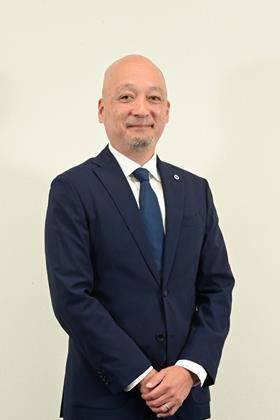
Atsushi Hironaga is President/Managing Director of IWATA LABEL Europe GmbH (IL Group). Drawing on earlier success in the automotive industry, where he capitalised on emerging EV trends, Atsushi developed a strong understanding of regulation‑driven transformation. As President of IL Group’s European subsidiary and a board director, he now applies this perspective to the pharmaceutical industry, advocating environmentally focused labelling as a key element of compliance and sustainability in Europe. He holds an MBA in international marketing from International University of Monaco.
References
1. NEION Film Coatings Corp. Closed‑Loop Recycling of Label Release Film. Resource Recycling Project documentation. 2026.
2. World Packaging Organization. WorldStar 2025 Case Study: Resource Recycling Project for pharmaceutical packaging (Shionogi Pharma Co., Ltd.). 2025.
3. European Commission. EudraLex Volume 4: EU Guidelines for GMP – Annex 1 Manufacture of Sterile Medicinal Products. Brussels. 2022.
4. International Council for Harmonization. ICH Q9(R1): Quality Risk Management. 2023.
5. Japan Partnership for Circular Economy. Closed recycling system label backing release liner “Resource Recycling Project”.
6. World Packaging Organization. WorldStar Global Packaging Awards 2025 – Sustainability Special Awards.
7. European Commission. Regulation (EU) 2025/40 on packaging and packaging waste (PPWR). Official Journal of the European Union. 2025.





No comments yet