


As pharmaceutical laboratories face mounting pressure to accelerate timelines and manage growing data complexity, intelligent laboratory operations underpin the next generation of connected, autonomous lab environments.

The next evolution of the laboratory is no longer centered on individual instruments or isolated automation systems.
Increasingly, the focus is shifting toward intelligent operational ecosystems where workflows, data, robotics, and software platforms function together as a coordinated system. For many pharmaceutical and biotechnology organizations, orchestration is becoming the foundation that enables this transition, laying the groundwork for what many describe as a “Digital Lab OS”.
Once laboratory workflows become connected, new capabilities begin to emerge. Scheduling systems can dynamically optimize workflow execution in real time. Data moves automatically across instruments and software platforms. Robots coordinate sample movement with minimal human intervention. Scientists gain centralized visibility into laboratory operations rather than managing disconnected systems independently.
Most importantly, connected infrastructure creates the conditions necessary for artificial intelligence and autonomous laboratory operations to scale effectively.
This shift is happening as laboratories face growing pressure to accelerate timelines, support increasingly complex biologics workflows, and manage rapidly expanding data volumes.
Traditional approaches built around fragmented systems and manual coordination are becoming difficult to scale efficiently.
The rise of the Digital Lab OS
The orchestrated lab offers a different operational model. One built around connected workflows, integrated data environments, and intelligent coordination across the laboratory. In many ways, it resembles a Digital Lab OS, a laboratory operating system that coordinates instruments, software, workflows, and data behind the scenes.
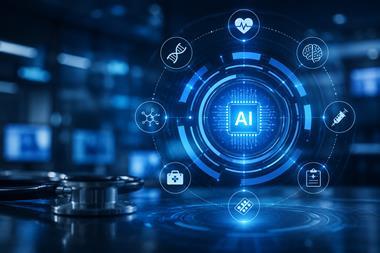
Artificial intelligence is becoming an increasingly important layer of modern laboratory operations. AI-enabled systems are being used to support experimental optimization, anomaly detection, predictive maintenance, and workflow scheduling. However, these capabilities depend heavily on connected infrastructure and accessible data. In fragmented environments, valuable information often remains isolated across disconnected systems, limiting the effectiveness of intelligent automation.
Connected and orchestrated workflows help solve this challenge by creating interoperable data environments capable of supporting AI-driven laboratory operations at scale
Connected and orchestrated workflows [create] interoperable data environments capable of supporting AI-driven laboratory operations at scale”
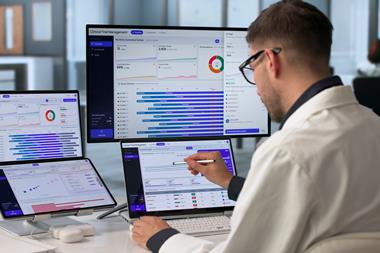
Within a Digital Lab OS, scientists focus on scientific analysis and decision-making while orchestration platforms manage workflow coordination in the background. Platforms such as the Thermo Fisher™ Connect Enterprise Platform illustrate how laboratories are beginning to unify automation, workflow coordination, and informatics within centralized digital ecosystems. Similarly, Thermo Scientific™ Momentum™ Workflow Scheduling Software coordinates workflows across robotics, analytical instruments, and laboratory automation systems through dynamic scheduling and real-time workflow management.
These orchestration platforms are becoming increasingly important as laboratories move toward the Digital Lab OS vision and more autonomous operations.
Building the foundation for autonomous science
In autonomous environments, robotics transport samples automatically between systems while scheduling software continuously optimizes workflow execution. Instruments communicate in real time, inventory systems monitor reagent availability, and data moves automatically across connected workflows. AI-enabled analytics platforms can help identify bottlenecks, optimize processes, and support adaptive decision-making during workflow execution.
Some laboratories are already operating continuously with minimal overnight staffing by combining robotics, workflow orchestration, and a connected digital infrastructure.
A practical path to transformation
For most organizations, the path to an orchestrated lab is gradual rather than a complete transformation undertaken all at once.
Laboratories typically evolve gradually through stages of digitization, standardization, integration, and intelligent orchestration. The most successful strategies focus on connecting existing systems incrementally rather than replacing infrastructure entirely. Organizations often begin with high-value workflows, integrate data environments over time, and expand orchestration capabilities gradually across laboratory operations.
This phased approach reduces operational disruption while allowing teams to demonstrate measurable value early in the transformation process.
Flexibility also remains essential. Most labs operate mixed-vendor environments developed over many years. Effective orchestration strategies therefore prioritize interoperability and open integration capabilities that allow existing systems to work together more effectively.
Creating a better scientific experience
Beyond operational efficiency, connected laboratory operations also improve the scientific experience itself.
Scientists should not spend large portions of their time coordinating schedules, moving data manually, or troubleshooting disconnected systems. By reducing these burdens, laboratories can help scientific teams spend more time generating insights, advancing research, and focusing on higher-value work.
The future laboratory will be defined by intelligent coordination across workflows, data, automation, and informatics. As laboratories continue to evolve toward more connected and adaptive operating models, the foundations being built today will enable the next generation of intelligent and autonomous science.
Click here to learn more.










No comments yet