



Day one of The Future of Bio/Pharmaceutical Analysis Virtual Summit 2026 focuses exclusively on quality assurance and control, with three panel sessions examining how environmental monitoring, endotoxin testing and contamination control are being reshaped by novel modalities, sustainability pressures and regulatory evolution. The programme addresses the practical challenges facing QA/QC professionals responsible for maintaining product safety and compliance in an increasingly complex landscape.
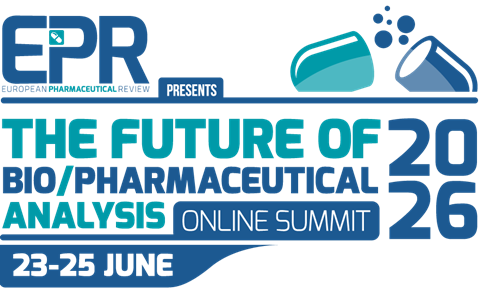
When The Future of Bio/Pharmaceutical Analysis Virtual Summit returns on 23–25 June 2026, it opens on familiar but fast-changing ground. Day one, Tuesday 23 June, is given over entirely to quality assurance and quality control — three back-to-back panel sessions that examine how the disciplines underpinning patient safety and product quality are being reshaped by new modalities, sustainability pressures and an evolving regulatory landscape. Delivered as live, expert-led panel discussions, the day is built for the people who carry day-to-day responsibility for keeping product safe and compliant. Here is what to expect from the opening day.
Modernising environmental monitoring (12:00–13:15)
The summit opens with a session on environmental monitoring, the bedrock of contamination control that is now under pressure to keep pace with biologics, cell and gene therapies and other emerging modalities. Each wave of product innovation demands monitoring approaches that can advance in lockstep — yet many traditional practices remain stuck in older paradigms, leaving novel tools and technologies as an often untapped resource. The panel will look at validating approaches across advanced therapies, assessing the latest compliance tools, and shifting from reactive sampling to a genuinely proactive monitoring strategy.
Transforming endotoxin testing (13:30–14:45)
Attention then turns to endotoxin testing, a crucial element of any contamination control strategy and one with significant patient-safety, product-quality and process implications. Manufacturers are under growing pressure to take a more sustainable approach and reduce reliance on finite natural resources — chiefly the horseshoe-crab-derived LAL reagent. With recombinant alternatives now backed by pharmacopoeial recognition, the question for many sites is no longer whether to switch but how. This session will explore recent advances in the field, the practicalities of switching successfully to non-animal reagents and assays, and how to tackle the trade-offs in speed, cost and complexity that have slowed wider adoption.
Optimising contamination control (15:00–16:15)
Day one closes with a session on contamination control, where minimising microbial risk depends on careful planning and the right decisions on operation, equipment and process — all framed within an overarching contamination control strategy. With Annex 1 now embedded in everyday practice, the emphasis has shifted from interpreting the guidance to operationalising it. Drawing on hard-won practitioner experience, the panel will share state-of-the-art approaches to establishing and innovating contamination control, including building the capability to detect challenging contaminants, reducing risks following planned shutdowns, and rethinking cleanroom design for modern manufacturing.
What ties the day together
Across all three sessions runs a common thread: the QA/QC function is being asked to do more, with greater scrutiny and tighter sustainability constraints, even as the products it safeguards grow more complex. None of these challenges sits in isolation — decisions about reagents, monitoring regimes and cleanroom design increasingly have to be weighed against cost, environmental impact and regulatory expectation all at once. The panels bring together senior microbiology, sterility-assurance and quality-control leaders from across global pharma, regulators and independent consultancies, offering practitioners a candid view of what is working, what is not, and where the discipline is heading next. Expect practical takeaways rather than theory, and plenty of room for audience questions. For anyone responsible for keeping product safe and compliant, day one sets the agenda for the rest of the summit, which moves on to regulatory strategy on day two and digital, AI and automation on day three.
Secure your place
Registration is complimentary but places are limited. Join QA/QC, regulatory, manufacturing and analytical development leaders from across the global biopharma industry for three days of practical insight, peer debate and forward-looking strategy. Register now for The Future of Bio/Pharmaceutical Analysis 2026.
Topics
- Advanced therapies manufacturing
- Bioprocessing and biomanufacturing
- Endotoxin Detection
- Environmental Monitoring
- Facilities, utilities and cleanrooms
- Future of Bio/Pharma Analysis 2026
- GMP and quality management systems (QMS)
- Quality, microbiology and contamination control
- Regulation and compliance
- Sterility and rapid methods










No comments yet