



Milestone authorisation represents the first T-cell engagement therapy for small cell lung cancer.
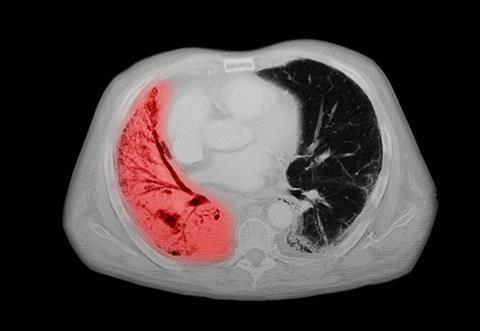
The European Commission (EC) has authorised a new first-in-class immunotherapy for extended-stage small cell lung cancer (ES-SCLC).
Amgen’s Imdelltra (tarlatamab) targeted immunotherapy in indicated for adults requiring systemic therapy after disease progression following platinum-based chemotherapy.
As a new treatment option, Imdelltra has been shown to provide a significantly higher survival rate to chemotherapy for these patients. Its approval represents availability of the first T-cell engagement therapy for the rare disease.
The EC’s decision is based on this finding, as seen in the Phase III DeLLphi-304 trial, the first global trial to demonstrate this outcome in this setting. Specifically, Imdelltra enabled a 40 percent reduction in the risk of death with Imdelltra compared to chemotherapy.
The immunotherapy works by binding to both DLL3 on tumour cells and CD3 on T cells, Amgen noted. This activates T cells to eliminate DLL3-expressing SCLC cells.
“[The EC’s] approval of Imdylltra, the first and only T-cell engagement therapy approved to treat small cell lung cancer, marks a significant milestone for patients in Europe”
Jean-Charles Soria, Senior Vice President, Oncology, Amgen, said: “Small cell lung cancer is one of the most aggressive solid tumours, with high relapse rates after first-line treatment and limited therapeutic options.
“The European Commission’s approval of Imdylltra, the first and only T-cell engagement therapy approved to treat small cell lung cancer, marks a significant milestone for patients in Europe.”
Results of DeLLphi-304 were presented at the 2025 American Society of Clinical Oncology (ASCO) Annual Meeting and published in The New England Journal of Medicine.
This new approval is another key development in Amgen’s efforts to expand its oncology pipeline. In January, the company acquired UK cancer biotech Dark Blue Therapeutics for $840 million, gaining access a host of small molecule-targeted protein degraders.
In March, Novartis made a larger oncology-focused acquisition, allocating $3 billion for rights to Pikavation Therapeutics’ PI3Kα inhibitors for HR+/HER2- breast cancer.












No comments yet