



New publication aligns with Eur. Ph.’s initiatives aimed at safeguarding contamination of ethylene glycol and diethylene glycol in pharmaceutical excipients.
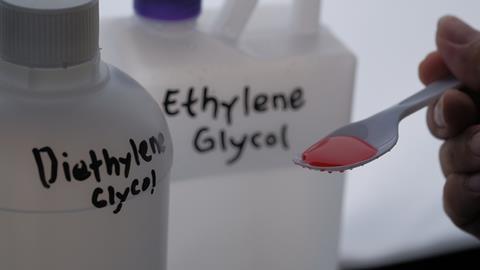
To enhance patient safety, the European Pharmacopoeia (Eur. Ph.) is seeking feedback on a new analytical procedure for detection and control of the impurities ethylene glycol (EG) and diethylene glycol (DEG).
The proposal is included in the revised monograph Macrogols (1444), which covers 12 grades of macrogol (polyethylene glycol), now published in Pharmeuropa 38.3.
The text introduces a new gas chromatography procedure employing a capillary column. It enables quantification via a derivatisation step and the use of an internal standard.
Eur. Ph.’s monograph Macrogols (1444) includes suggested revised limits for EG and DEG. Stakeholders are invited to share any relevant analytical data generated using the proposed gas chromatography procedure or another procedure, to ensure the proposed limits are fit for purpose, alongside their comments.
the proposed text [Macrogols (1444)] sets out individual limits: 620 ppm for ethylene glycol and 0.10 percent for diethylene glycol”
The current monograph describes a combined limit for EG and DEG. Meanwhile, the proposed text sets out individual limits: 620 ppm for ethylene glycol and 0.10 percent for diethylene glycol.
The Ph. Eur. recently adopted Propylene glycol (0430) and Glycerol (0496) monographs to further enhance control EG and DEG contamination in pharmaceutical excipients. Ongoing activities on dedicated EG/DEG tests are also planned for liquid sorbitol and maltitol, according to the Eur. Ph.
The Macrogols (1444) monograph is open for comments until 30 September. Guidance on providing feedback can be viewed here.
Last month, the Ph. Eur. also updated general chapter 5.1.6 on alternative microbiological methods, modernising the text to remove outdated quality control approaches. Its publication supports growing demand for alternative methods, particularly rapid approaches, including those that use AI. This revised general chapter comes into force on 1 April next year.







No comments yet