


Pharmaceutical quality control laboratories face growing pressure to strengthen data integrity as regulators scrutinise incomplete records, manual data entry, and disconnected systems. Technology alone is not enough; it must be underpinned by validation, access controls, and sound processes, which is why laboratories need integrated systems that are compliant by design. Connected digital platforms such as LIMS, ELN and LES capture data at source, maintain audit trails, and support faster, inspection-ready quality decisions, all in line with ALCOA+ principles and requirements such as 21 CFR Part 11 and GMP Annex 11.
Data integrity has been a regulatory priority for the life sciences industry for years and remains a persistent compliance challenge in pharmaceutical quality control (QC). Despite extensive regulatory guidance, QC laboratories can still face observations when records are incomplete, not readily traceable, or insufficiently controlled throughout the data lifecycle. Data integrity failure is rarely due to a lack of awareness. Many QC environments continue to operate with a mix of legacy systems and manual processes that create inherent vulnerabilities, including:
- Reliance on paper records: Uncontrolled blank forms and handwritten logs remain common, increasing the risk of transcription errors and reconciliation gaps.
- Manual data transcription: The manual movement of data between instruments, spreadsheets, and reporting systems creates opportunities for undocumented changes or loss of context.
- Disconnected laboratory systems: When instruments, sample metadata, and calculations reside in siloed environments, reconstructing a complete analytical history during an inspection becomes an administrative burden.
- Limited audit visibility: Without a unified digital workflow, identifying patterns in result amendments or detecting quality issues before they become out-of-specification (OOS) events is nearly impossible.
To address these gaps, the industry is moving away from purely procedural safeguards and toward integrated informatics solutions.”
To address these gaps, the industry is moving away from purely procedural safeguards and toward integrated informatics solutions. By designing compliance directly into the digital workflow, utilising technologies such as LIMS, LES, and ELN, laboratories can ensure that data is captured at the point of origin, attributed correctly, and secured throughout its entire lifecycle.
What regulatory standards govern data integrity in pharma QC?
Around the world, regulators are sending a remarkably consistent message. Whether considering U.S. FDA requirements under 21 CFR Parts 11 and 211, the European Union’s GMP Annex 11, or guidance from organisations including the MHRA, FDA, PIC/S, and WHO, the expectation is clear: laboratory data should be trustworthy from the moment it is created until the moment it is archived.
At the heart of these expectations is the ALCOA+ framework, which defines high-quality data as Attributable, Legible, Contemporaneous, Original, Accurate, Complete, Consistent, Enduring, and Available.
The real challenge lies in consistently achieving those principles when laboratory information is spread across siloed records, spreadsheets, standalone instruments, and legacy software. Compliance becomes much harder when the underlying infrastructure isn’t built to support it.
What are the common data integrity risks in daily lab operations?
Data integrity failures rarely result from a single major mistake. They accumulate in the ordinary moments of laboratory work.
Often, they stem from routine laboratory activities involving manual transcription, spreadsheet modifications without traceability, locally stored instrument results, or shared user credentials. None of these moments feels significant in isolation. Cumulatively, they create exactly the kind of data lifecycle gaps that regulators are trained to find moments where a record is neither secured, attributable, nor verifiable.
For example, during HPLC analysis:
- Chromatographic data may be reviewed in one application
- Sample metadata resides in another system
- Calculations are manually transferred into spreadsheets
- Final results are entered into the system
Each additional handoff increases the risk of transcription errors or undocumented changes.
GMP Annex 11 requires computerised systems to include controls for data entry, audit trails, access management, and disaster recovery. What it does not specify is how those controls are implemented. That is the laboratory’s responsibility and the decision point where QC organisations either close the gap or leave it open.
How can labs build data integrity into their workflows?
Many organisations respond to data integrity concerns by introducing additional control and safety procedures, more oversight and training, or stricter documentation requirements. These safeguards are important; however, they don’t address the root cause.
The strongest data integrity programmes combine trained people, sound procedures, quality oversight, and systems”
The strongest data integrity programmes combine trained people, sound procedures, quality oversight, and systems designed to make compliant behaviour easier to execute consistently.
When laboratory workflows are digital from beginning to end, data can be captured automatically at the point of measurement, attributed to the authenticated user, and secured with system-generated timestamps, minimising manual transcription. This reduces opportunities for error while creating a more reliable chain of evidence. Download our white paper on “Data Integrity in the Pharma Space: How Digital Protects Pharmaceutical Data”.
Why is connected informatics essential for data integrity?
Integrating a Laboratory Information Management System (LIMS), Electronic Laboratory Notebooks (ELN), and Laboratory Execution Systems (LES) into a unified informatics environment is the most structurally reliable way to meet modern data integrity requirements.
This is not a technology argument. It is a process control argument.
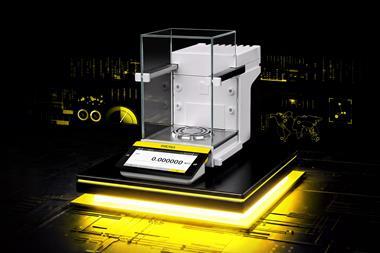
When sample preparation workflows are executed through an LES connected directly to calibrated instruments, balances, pH meters and other analytical equipment, measurement data moves automatically into the system database. With validated interfaces and appropriate configuration, measurement data can be transferred into the laboratory record without requiring manual re-entry. This can reduce transcription errors and support traceability of the source data, the analyst, and the time of capture.
How does an audit trail strengthen data integrity?
Most laboratories treat the audit trail as a compliance feature: something to produce during an inspection, not something to actively use in between inspections.
A well-configured audit trail does considerably more than log changes. It creates a continuous chain of custody across every data point in the laboratory, enabling QC managers to identify patterns in result amendments, track reviewer response times, and detect emerging quality issues before they become out-of-specification events.
Whether responding to an out-of-specification (OOS) result, laboratory deviation, or customer complaint, investigators can reconstruct every step of the analytical process without relying solely on handwritten notes or individual recollection. This accelerates root cause analysis while strengthening confidence in corrective and preventive actions (CAPA).
Some analytical instruments and associated data systems may allow information to remain in local or temporary storage before it is saved as a permanent record. Laboratories should assess whether this creates opportunities to repeat, overwrite, omit, or selectively retain data without appropriate traceability. Effective controls depend on the instrument, its software, interface design, access configuration, audit-trail capability, and validated workflow.
How do digital workflows accelerate second-person review?
Electronic signatures and approvals used in GxP processes should be implemented in accordance with applicable regulations, intended use, and validated procedures. For pharmaceutical QC, this intersects directly with the second-person review; a procedural control that is only as strong as the system enforcing it.
In paper-based environments, reviews often depend on physically locating documents, collecting handwritten signatures, and manually tracking approvals. These activities consume valuable time while offering limited visibility into the overall review process.
In contrast, in digital laboratory workflows, collaboration is fostered across functions. Analysts, supervisors, and quality assurance teams can access the same validated information in real time, reducing communication delays and enabling faster, more informed decisions throughout the product release process. Every approval is securely time-stamped, creating a transparent and traceable review history.
The result isn’t simply better compliance. It’s a faster, more efficient QC release process where bottlenecks are easier to identify and resolve before they delay product release.
What makes a laboratory future-ready for data integrity?
As laboratories modernise, they should evaluate whether their informatics environment supports the intended workflow and can be maintained in a validated state. Key considerations include controlled instrument data capture, role-based access, appropriate audit trails, change management, record retention, and a risk-based validation approach. Computer System Validation (CSV) also plays a critical role in ensuring data integrity by demonstrating that computerised systems consistently perform according to their intended use. Through IQ, OQ, PQ, traceability, controlled documentation, and formal testing, CSV helps ensure that regulated data remains reliable and controlled. It also supports compliance with 21 CFR Part 11 and other GxP requirements governing electronic records.
As laboratories modernise, compliance should become an outcome of connected digital workflows rather than a separate activity.”
As laboratories modernise, compliance should become an outcome of connected digital workflows rather than a separate activity. Future-ready informatics platforms must integrate instruments, support validated processes, maintain comprehensive audit trails, and adapt to evolving regulatory requirements while protecting data throughout its lifecycle.
Why is a structural solution needed for data integrity?
Data integrity in pharmaceutical QC cannot be solved through policy updates or training programmes alone. The vulnerabilities that persist across the industry are not the result of poor intent; they are the result of systems that were never designed to prevent them.
The regulatory frameworks are clear. Together, ALCOA+, Annex 11, and 21 CFR Part 11 describe a laboratory where data is captured at the point of origin, protected throughout its lifecycle, and available for inspection in a complete and auditable form.
From sample receipt to batch release, LabVantage helps pharmaceutical QC laboratories generate trusted, audit-ready data while improving operational efficiency.
To learn more about approaches to building connected, inspection-ready QC workflows, contact LabVantage.
About LabVantage Solutions
LabVantage Solutions is a global leader in laboratory informatics, driving digital transformation through LabVantage CORTEX™. This AI, analytics, and automation platform unifies LIMS, ELN, LES, SDMS, and analytics in a 100 percent browser-based environment with Agentic AI. With 40+ years of LIMS expertise and 1,500+ customers across industries, LabVantage helps streamline workflows and support compliance The company is headquartered in Somerset, New Jersey. For more information, visit labvantage.com








No comments yet