



Research supports pharmaceutical microbiological risk assessments and thaw-handling steps during manufacture and storage.
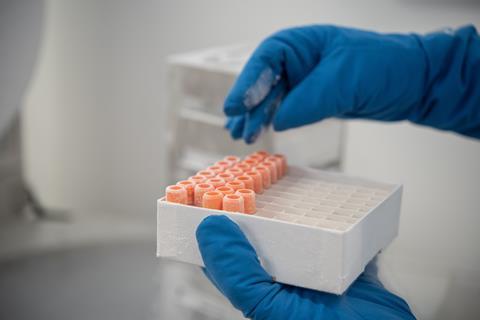
Repeated freeze-thaw cycling is generally more damaging to microorganisms than a single thaw during pharmaceutical development and manufacture, research by AstraZeneca scientists suggest.
Walker et al. concluded that “freeze-thaw exposure reduces, but does not necessarily eliminate, microbial survival.”
The finding is notable, says Walker et al. While frozen storage for pharmaceutical preparations is common, “the microbiological consequences of thaw-handling remain insufficiently identified, resulting in uncertainty and inconsistency in microbial risk assessment”.
freeze-thaw exposure reduces, but does not necessarily eliminate, microbial survival”
For example, the authors highlighted that thawing of solutions and suspensions “may involve repeated freeze-thaw cycles and ambient handling windows, creating opportunities for contamination events to influence microbial proliferation”.
In their study, eight microorganisms were suspended in tryptone soya broth (TSB), purified water (PW), and phosphate-buffered saline (PBS) and stored at -20°C. Their viability was assessed following either a single freeze-thaw event after four weeks or repeated weekly freeze-thaw cycling over four weeks using membrane filtration and colony enumeration.
The authors expected repeated cycling to “bring greater loss of cultivability than a single thaw, and that survival would be highest in TSB and lowest in purified water”.
Yet results showed the repeated protocol “generally caused greater viability loss than a single freeze-thaw event, although responses varied by organism and matrix”.
Despite no microbial proliferation being observed during thawing, “Gram-negative organisms were more susceptible to the effects of freeze/thaw and single thaw”.
Walker et al. theorised that including product formulations would improve applicability of the results directly to early-stage drug development and manufacturing environments.
Overall, the study provides evidence to justify freeze-thaw stages of microorganisms during pharmaceutical manufacture and storage.
The paper was published in EJPPS.











No comments yet