

Applying the continuous-flow technology enabled domestication of previously uncultured bacteria, addressing a key bottleneck in laboratory microbial cultivation.
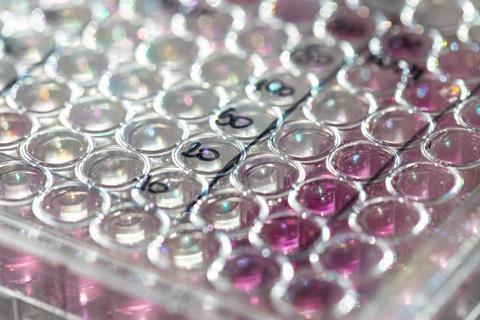
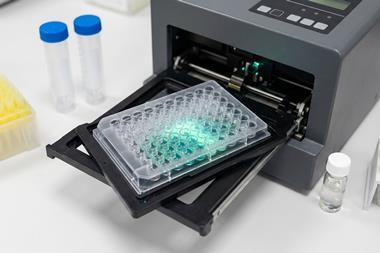
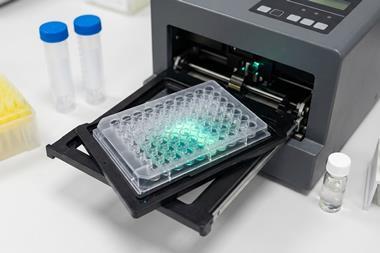
A 3D-printed continuous-flow cultivation plate has shown efficacy in helping to gradually transition bacteria from a native media (pondwater) to cultured media.
The enhanced domestication (EDEN) method developed by researchers at Imperial College, London, offers a potential advancement in this area as standard techniques often reduces cell cultivability. Moreover, conventional microbial culturing methods are inefficient, leaving “99 percent of microbes” uncultured, according to Morrison et al. and thus “the majority of their diversity unexplored”.
Notably, EDEN-acclimatised bacterial monocultures showed three-fold greater taxonomic diversity and tenfold more unique and likely-uncultured taxa. The researchers found that EDEN doubled the cultivability of agarose-encapsulated microcolonies. The team were also able to isolate a novel bacterial species with potent antimicrobial activity against drug-resistant pathogens.
The EDEN microwell plate…works by minimising microbial exposure to abrupt media and environmental transitions, thereby limiting potential nutrient shock effects”
This was achieved via the continuous flow capability within the EDEN microwell plate. It works by minimising “microbial exposure to abrupt media and environmental transitions, thereby limiting potential nutrient shock effects”.
Moreover, the 3D-printing and print-pause-print technique applied to fabricate EDEN plates “eliminated the need for manual assembly or adhesives with dubious biocompatibility”.
Future applications of the EDEN method could include cultivating some fungi, the authors suggested. Alternatively, as a perfusion bioreactor or integrating EDEN with liquid handling robots, enabling high-throughput screening of novel microbial diversity.
Morrison et al. surmised that EDEN may prove a useful method to access uncultured bacteria and support the discovery of bioactive compounds and novel therapeutics, including antibiotics.
The paper was published in ISME Communications.
While the current study utilised R2A media, separate research has shown promise for enhancing the accuracy of microbiological testing by mitigating moisture-related issues. A key observation from the study noted condensation on Petri dish lids is predominantly driven by differences in temperature between adjacent dishes.






No comments yet