

Faced with increasing regulatory pressure and operational complexity, pharmaceutical manufacturers are rethinking the microbiology workflow. Intelligent automation is enabling a shift toward more consistent, scalable, and data-driven contamination control.
Pharmaceutical manufacturers are increasingly reevaluating their stance on intelligent automation, moving from cautious skepticism to strategic adoption. This shift is driven by a convergence of factors: rising regulatory expectations, the need for greater operational efficiency, and the growing complexity of contamination control strategies. Nowhere is this more evident than in pharmaceutical microbiology, where traditional methods are being augmented and enhanced by AI-powered automation.
Historically, microbiological testing has relied heavily on manual processes such as culture plate reading, colony counting, and environmental monitoring assessments. While these methods are well established, they are fundamentally subjective and resource intensive. Variability in human interpretation, coupled with increasing sample volumes in modern manufacturing environments, has exposed limitations in scalability and consistency. As a result, manufacturers are recognizing that maintaining a robust contamination control strategy requires more standardized, data-driven methods.
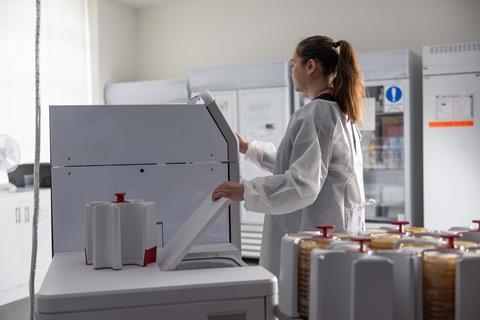
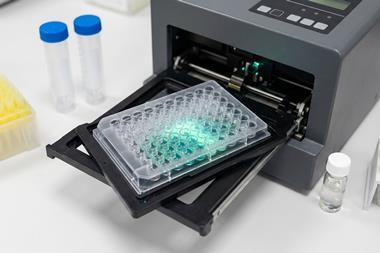
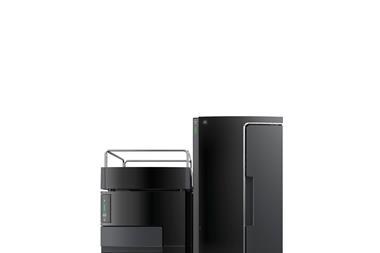
Intelligent automation addresses these challenges by introducing high-throughput, reproducible analysis into microbiology workflows. For example, the APAS® Independence, an AI-powered automated plate reader, uses advanced imaging and machine learning algorithms to detect microbial growth with a level of consistency that is nearly impossible to achieve manually. From a technical standpoint, the system operates using predefined, validated and locked models that ensure deterministic behavior, an important requirement in regulated GxP environments. This eliminates analyst-to-analyst variability and enhances the consistency of test results across batches and facilities.
Data integrity is another critical area where intelligent automation provides significant value. APAS Independence digital reporting capabilities were designed to capture, process, and transfer data within secure digital frameworks, addressing the risk of transcription errors or data loss. Integrated audit trails and standardized data outputs ensure traceability, which is essential for both internal quality assurance and regulatory inspections. In an era where data governance is under increasing scrutiny, these capabilities are not just beneficial, they are essential.
From a validation perspective, the industry’s growing acceptance of artificial intelligence is closely tied to the adoption of risk-based approaches. Rather than attempting to dissect the algorithms themselves, validation efforts focus on demonstrating that systems perform as intended within their defined use cases. This includes verifying robustness, repeatability, and accuracy under real-world conditions. By aligning validation strategies with system risk and intended use, manufacturers can confidently deploy AI-enabled technology while maintaining compliance with global regulatory frameworks.
Ultimately, the shift towards intelligent automation reflects a broader evolution in pharmaceutical manufacturing. As contamination control strategies become more sophisticated, the need for reliable, scalable, and data-centric microbiology solutions will continue to grow. By embracing intelligent automation, manufacturers are not only able to improve efficiency and compliance but also build more resilient quality systems capable of meeting the demands of modern pharmaceutical production.




No comments yet