


CEO of Lupin Manufacturing Solutions, shares his perspective on what differentiates credible CDMO entrants as pharmaceutical pipelines shift towards structurally complex molecules.
How is the CDMO model evolving beyond transactional manufacturing?
Abdelaziz Toumi (AT): The contract development and manufacturing organisation (CDMO) model has been evolving for some time, however we are now at a more decisive inflection point than the industry appreciates. The traditional contract manufacturing relationship has historically been fundamentally transactional, yet it is no longer the centre of gravity for the most strategically important programmes moving through development pipelines today.
Now, the nature of the scientific problem that manufacturers are being tasked with is changing rapidly. As pipelines shift towards structurally complex molecules – including peptides, high-potency small molecules, oligonucleotides and conjugates of various architectures – the process chemistry is often not fully resolved when a molecule enters a manufacturing partnership. CDMOs are increasingly expected to do the heavy lifting, which includes bringing process understanding, analytical capability and synthesis insight that meaningfully shapes the path to commercial manufacturing.
When a CDMO is embedded in the scientific development of a molecule… This evolution places genuine pressure on CDMOs to invest far more seriously in scientific talent, analytical infrastructure and process development capability than the transactional model did”
This ultimately changes the economics and the risk profile of the relationship. When a CDMO is embedded in the scientific development of a molecule, knowledge continuity across phases becomes critical. The institutional memory of how a synthesis route was designed, what process sensitivities were identified and which impurity profiles are characteristically associated with particular synthetic steps becomes a shared technical asset. Transferring to a different manufacturer later in development is therefore a technical risk event with real timeline and regulatory consequences.
This evolution places genuine pressure on CDMOs to invest far more seriously in scientific talent, analytical infrastructure and process development capability than the transactional model did. It also places a greater responsibility on CDMOs to be honest about the boundaries of their competence. In a development partnership, overpromising at the early stage has consequences that surface with full force during late-stage scaleup and regulatory review.
Fundamentally, talent strategy needs to be treated as a long-range capital allocation decision rather being managed as an operational overhead to be optimised within a given budget cycle. Organisations that invest in structured graduate development programmes, technical mentorship infrastructure and academic relationships that generate the researchers who will eventually enter industry, will carry a meaningful structural advantage.
What differentiates credible new CDMO entrants in a crowded global market?
AT: The CDMO market has expanded considerably over the past decade, and the entry barriers to basic contract manufacturing are low enough that differentiation has become genuinely difficult to assess from the outside. The market feels crowded by organisations with sophisticated facility specifications, credible quality systems and compelling capability narratives. The harder question – the one that technically sophisticated partners are focused on – is where the scientific capability actually resides and how deeply it extends when a programme encounters the unexpected.
In my view, the differentiators that carry the most weight for new entrants operating in technically demanding segments are scientific depth, regulatory credibility and what I would describe as process culture – ie, the organisational habits and systems that determine how manufacturing knowledge is generated, documented and applied day to day.
Scientific depth, should be measured by the quality of the process chemists and chemical engineers who can navigate complex synthetic pathways, understand impurity formation mechanisms at a mechanistic level and develop synthesis routes that are not only functional at lab scale, but also stand robust through the transition to commercial manufacturing. That transition is where most of the challenges emerge and where the gap between genuine technical capability and well-presented capacity becomes visible.
Regulatory credibility takes time to build and that is precisely where its value lies. An unsolicited inspection outcome, a sustained absence of major observations, a demonstrated ability to manage change control and deviation investigations to the standards that major regulatory authorities expect are the signals that experienced partners read carefully and weigh heavily. Facilities that have not been through sustained regulatory scrutiny represent a risk profile that late-stage and commercial programmes cannot absorb.
Process culture may be the most difficult attribute to communicate externally, but it is often the most predictive. It manifests in how an organisation manages the routine unexpected events that characterise complex manufacturing because in this business, deviation is rather structural. The organisations that build durable reputations are those where scientific rigour is designed into daily operational practice rather than being deployed selectively for audits.
Following its collaboration with PolyPeptide Group, what broader strategies is LMS taking to strengthen the resilience of its global supply chain for peptide therapies, given their emerging status as a foundational modality?
AT: Peptides are perhaps the most instructive modality to examine when seriously considering supply chain resilience, because the manufacturing value chain for a peptide therapeutic is longer, more technically interconnected and more geographically concentrated than most other pharmaceutical modalities. The structural vulnerabilities became highly visible during the supply pressures associated with GLP-1 therapies but those vulnerabilities predate that demand surge significantly. What has changed since then is the industry’s willingness to examine them with greater honesty.
The resilience challenge operates at multiple levels simultaneously. With raw materials, the availability of peptide building blocks, including protected amino acids, at the purity grades and controlled impurity profiles required for commercial pharmaceutical synthesis is constrained by a relatively small number of suppliers operating globally. At the synthesis level, solid-phase peptide synthesis at commercial scale requires specific process chemistry expertise, specialised equipment configurations and purification capability that takes years to develop and validate properly. At the regulatory level, the interdependencies across the supply chain mean that a process change at any point can trigger validation obligations with significant timeline implications downstream.
The alliance addresses one critical dimension of this. While PolyPeptide brings deep synthesis expertise along with multi-site geographic reach, the expansion of peptide building blocks production at our Dabhasa site in India contributes the upstream dimension of that integration. Together, these efforts aim to create a more coherent and technically de-risked pathway across the value chain, with improved visibility and control at each point of potential failure.
resilience in peptide supply chains [requires] investment in analytical infrastructure and regulatory documentation that allows supply chain integration to be substantiated across both development and commercial phases”
The broader strategic principle we are working from is that resilience in peptide supply chains must be deliberately designed, which requires vertical integration thinking rather than simple vendor diversification. It requires investment in analytical infrastructure and regulatory documentation that allows supply chain integration to be substantiated across both development and commercial phases.
How can companies align their capabilities, partnerships and long-term development pathways from the outset?
AT: The alignment question is underestimated in early-phase planning conversations and the consequences of that are felt at the worst possible time, especially during late-stage scaleup or at the threshold of regulatory submission, when the cost of redesign is highest and the tolerance for delay is lowest.
The decisions made in Phase I about process chemistry, analytical method design, salt and polymorph selection and synthesis route architecture are not simply preclinical choices. They are load-bearing structures on which every downstream stage depends. When those decisions are made in isolation from commercial manufacturing realities – as frequently happens when early development is conducted in academic or discovery-oriented environments – then the cost must be deferred.
I would advocate for what I call ‘manufacturability-led development’ as a guiding principle from the earliest stages. This does not mean constraining early-phase chemistry to commercial-scale equipment limitations as that would be counterproductive. It means ensuring that individuals with commercial-scale process understanding are present in design conversations early enough to influence them. The process chemist who will eventually be responsible for a kilogram-scale campaign should be contributing perspective when the synthetic route is being selected and not encountering it for the first time at tech transfer.
Analytical method development is a specific area where early alignment has disproportionate downstream impact and is routinely handled poorly. Methods developed for characterisation at milligram scale are frequently not fit for purpose as release or in-process control methods at commercial scale. The transition from characterisation-grade to control-strategy-grade analytics is a substantial scientific undertaking and it becomes considerably more expensive and time consuming when treated as a Phase III problem.
Partnership alignment follows the same logic. The CDMO relationship that begins at technology transfer, rather than at process development, absorbs risk without contributing to its mitigation. The value of a genuine development partnership is that scientific knowledge accumulates continuously across the development lifecycle. For complex molecules, where process understanding is inherently multivariate and accumulates non-linearly, that continuity is a structural requirement for managing development risk effectively.
What is your outlook on the future of oncology manufacturing? What infrastructure changes do you expect and what considerations should manufacturers prioritise when it comes to efficiently scaling production?
AT: Oncology manufacturing is undergoing a transformation that is more structurally significant than what the industry experienced during the biologics transition two decades ago. The convergence of distinct modality categories such as antibody–drug conjugates, radiopharmaceuticals, high-potency small molecules and various combination formats is creating a manufacturing environment of unprecedented technical complexity. The infrastructure required to support this portfolio requires a qualitatively different kind of operation, governed by a different set of containment, safety and process control requirements.
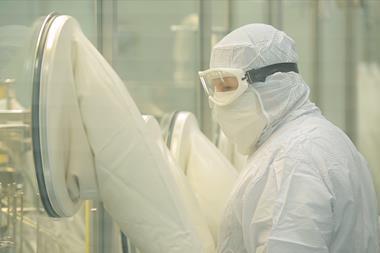
On the infrastructure side, the most pressing evolution is in containment engineering. The occupational exposure band requirements for many modern oncology compounds – particularly the cytotoxic payloads used in ADC manufacturing – have pushed containment design towards closed processing, isolator-based handling and continuous environmental monitoring at levels that most existing pharmaceutical facilities were not designed to accommodate. The capital investment is substantial, but the underappreciated challenge is organisational, which includes building the safety culture, qualification programmes and risk assessment frameworks that allow complex high-potency work to proceed safely and reproducibly at scale.
For manufacturers making investment decisions in this space, three considerations stand out. First, specificity over a generalist approach – and that includes infrastructure designed to accommodate the full potency range that tends to underperform at the extremes. The highest containment categories are best served by purpose-designed facilities.
Second, scalability architecture that includes oncology programmes, particularly those with accelerated approval pathways and can shift in volume requirements rapidly.
Third, regulatory engagement from design stage – and that includes regulatory expectations as novel oncology manufacturing modalities are still actively evolving. Organisations that engage proactively with authorities during facility design will be positioned better than those that build first and consult agencies at the submission stage.
About the interviewee
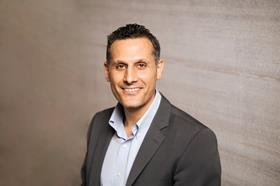
Dr Abdelaziz Toumi is the founding Chief Executive Officer of Lupin Manufacturing Solutions, the global CDMO arm of pharma major Lupin Limited. He has more than two decades of experience spanning the biotech, pharmaceutical and life sciences sectors across geographies. Abdelaziz holds a doctorate in chemical engineering from the University of Dortmund and a masters of business administration. He is also a recipient of the Namur Award for Predictive Control of SMB Processes, a prestigious European recognition in process systems engineering.






No comments yet