

Helen Bickley, Chief Quality Officer, FUJIFILM Biotechnologies reveals a new agile approach to biologics production that adopts a modular strategy for greater flexibility and ease.
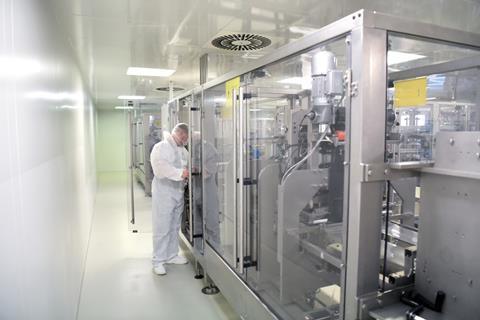
The COVID-19 pandemic exposed critical weaknesses in the global biomanufacturing ecosystem. Capacity constraints and fragile supply chains created delays and inventory shortages, resulting in unprecedented uncertainty for our clients about how biologics are produced and delivered to patients. Today, similar challenges persist.
Rising geopolitical tensions, natural disasters, evolving regulatory landscapes and projected personnel shortages – estimated to exceed 60,000 vacancies by 2029 – continue to test the resilience of manufacturing networks and supply chains. At the same time, the continued expansion of therapeutic modalities beyond monoclonal antibodies, including antibody-drug conjugates (ADCs), cell therapies and viral gene therapies, has introduced additional complexity.
Global biomanufacturing in a post-COVID era
A clear example of these challenges occurred during the pandemic, when FUJIFILM Biotechnologies was tasked with producing a vaccine product at multiple sites in our CDMO network. We quickly realised that a single technology transfer across sites was not easily feasible. Differences in equipment, facility layouts and operational practices meant that each site required its own tech transfer, process establishment and process performance qualification (PPQ). The result was a slow, inefficient and resource-intensive process.
It was obvious that the traditional product- or process-centric approach to facility and operational design was insufficient to meet the demands of biomanufacturing in the current climate. It was no longer sustainable to continue operating in the same way. The world was changing and our approach to biomanufacturing needed to change with it.
Meeting the evolving needs of our clients and the patients they serve necessitated a system built around agility and patient safety. Patient-centric design means that decisions around facility layout, operational strategies, technology and process controls begin with a focus on mitigating patient risk. Approaching design in this way also simplifies technology transfer, enables faster scale-up across multiple sites and helps streamline supply chains. Just as important is the ease of maintaining consistent quality and responding rapidly to client and patient needs.
Implementing a patient-centric, future-ready design
These insights shaped our approach to the Billingham, UK facility from the outset. We designed the building for future needs, recognising that therapeutic modalities will continue to evolve and that patient risk must remain central to every decision. A facility optimised solely for today’s products quickly becomes tomorrow’s constraint.
Our objective was to create a facility with far greater agility, capable of supporting multiple modalities without significant redesign. If required, the facility should be able to manufacture a monoclonal antibody today and a viral gene therapy product tomorrow without fundamental redesign. We also needed to simplify supply chains, to make better decisions faster using patient-centric risk management and enabling data to be shared from a single source of truth.
Facilities built around specific products or processes that require extensive manual intervention are neither resilient nor cost-effective, particularly in an industry facing workforce shortages and supply chain volatility. We asked fundamental questions: How do we automate wherever possible? How do we remove paper-based systems? How do we eliminate non-value-adding activities that do not improve patient safety?
One of the key concepts behind this approach is the use of unit operation systems, which we define as a discrete step in the manufacturing process, such as cell culture or purification. Traditionally, processes were designed and validated around specific pieces of equipment. If that equipment changed – even if it performed the same function – the process often required revalidation.
[In this new model] rather than tying validation to a specific piece of equipment, the focus is on controlling the aspects of the process that impact the patient most”
In this new model, each unit operation system functions as a defined, self-contained building block, designed around identified patient hazards. Rather than tying validation to a specific piece of equipment, the focus is on controlling the aspects of the process that impact the patient most.
This approach provides full visibility and control over potential patient hazards, aligned with ICH Q9 and Q10 principles that prioritise risk-based quality management. Because non-critical variables are deprioritised, this filters out low-impact noise in the system, helping to streamline deviation management and root cause analysis. In practice, this simplicity provides significantly greater flexibility in how operations are implemented while still maintaining the controls necessary to protect product quality and patient safety.
Flexibility is achieved not through customisation, but through intentional design from the outset”
Most importantly, this model supports a modularisation strategy. Unit operation systems can be treated as building blocks that can be combined and rearranged to construct multi-stage manufacturing workflows capable of supporting different modalities without compromising control or safety. Flexibility is achieved not through customisation, but through intentional design from the outset.
Harmonising a global network
These collective learnings have become codified internally as kojoX – FUJIFILM Biotechnologies’ harmonised operating ecosystem for facility design and operations that can be applied across our US, UK and Japan sites to deliver speed, flexibility and supply chain assurance. Unit operation systems harmonised across the network execute consistently, regardless of location, greatly simplifying tech transfer across sites.
The focus remains on controlling the critical parameters that impact patient safety and product quality, while allowing flexibility in the specific technologies used to execute the operation. The insights, best practices and process improvements captured at one site, can be rapidly applied across the network – ‘learn once, deploy everywhere’.
This single source of truth reduces reliance on site-specific tribal expertise, promotes collaboration and provides a consistent client experience. It also reinforces the ability to deliver predictable, high-quality outcomes for patients, regardless of where a product is manufactured.
From a regulatory perspective, the harmonised and modular design creates opportunities for tangible benefits. If a process has been inspected at one site, the functional equivalence of other sites could potentially eliminate the need for inspections at other facilities in the network, creating efficiencies that accelerate patient access to critical therapies.
Embedding quality from the start
FUJIFILM Biotechnologies’ UK expansion, including the Billingham facility and our new single-use manufacturing hub, exemplifies this next-generation CDMO model. Traditional CDMOs are often site-centric and asset-based, with quality layered on after the fact. The kojoX model, by contrast, is patient risk-centric, network-based, harmonised and modular, with quality embedded from the start. It is designed to withstand global volatility while ensuring faster, safer access to biologics for patients worldwide.
For our clients, this means manufacturing across multiple regions becomes simpler and more predictable. Supply chain costs and timelines are reduced, and the inherent flexibility of harmonised, modular operations enables rapid adaptation to evolving geopolitical concerns and therapeutic needs.
Above all, this work reflects the passion and dedication of our teams. Everyone involved, from operations and engineering to quality and regulatory, has embraced the challenge of rethinking how biologics are made. By embedding quality and patient-centric thinking in all our operations, we are not just delivering biologics, we are building a more agile, resilient and innovative model for global biomanufacturing, driven by a shared commitment to the patients we serve.
About the author
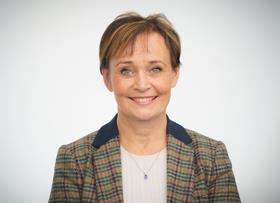
Helen Bickley is Chief Quality Officer at FUJIFILM Biotechnologies.







No comments yet