General Manager Brian Morrissey discusses his company’s acquisition of fellow Beta-Lactam manufacturer Athlone Laboratories and its implications for an evolving industry.
Mounting geopolitical tensions over the past year have increased scrutiny of pharma supply chains and brought a renewed focus to onshoring manufacturing capabilities.
It was one of the factors at play in Gaelic Laboratories’ acquisition of Athlone Laboratories in December, a move that consolidated Ireland’s two leading producers of oral dose beta lactam antibiotics.
Assuming responsibility for both companies is Brian Morrissey, General Manager of Clonmel, County Tipperary-based Gaelic Laboratories. He joined European Pharmaceutical Review to discuss the deal and what it means within the evolving industry.
EPR: Can you walk us through this acquisition and why the two companies are a good fit for each other?
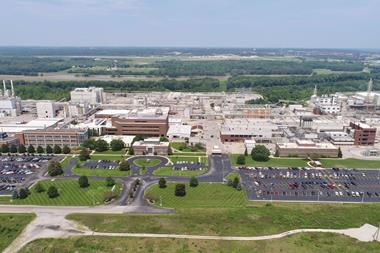
Brian Morrissey: Both Gaelic Laboratories and Athlone Laboratories are well established pharma manufacturers with strong reputations in Beta-Lactam antibiotics. The deal, which took the form of a straightforward transfer of ownership, allowed Gaelic Laboratories to take over Athlone Laboratories as a going concern. That means Gaelic Laboratories now owns the Athlone facility’s assets, equipment and selected intellectual property, and Gaelic Laboratories assumes responsibility for existing contracts, employees and operational infrastructure for both companies.
The two companies are a good fit for each other because both companies are key players in the supply chain for Beta-Lactam antibiotics. This kind of so-called ‘horizontal’ acquisition is a common strategy to expand market presence and increase competitiveness.
What impact will it have on the contract manufacturing services you can now offer?
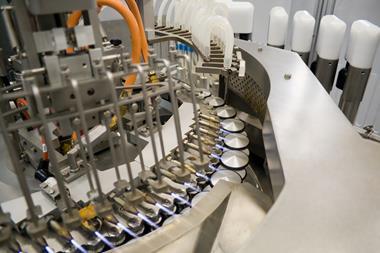
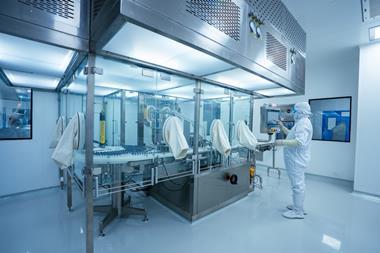
BM: We intend to make the most of a number of operational and business synergies to enhance our contract manufacturing offering. To begin with, we will be focusing on optimising manufacturing processes, ensuring a seamless workforce transition, and aligning IT and compliance systems, and supply chains, for a smooth operational shift. All existing product lines and customer contracts are expected to continue without disruption. Over the longer term, we expect to achieve financial and operational benefits, including revenue growth and cost savings.
What sorts of regulatory advantages do you expect to see from this deal?
BM: From our hub in the Republic of Ireland, the two companies’ combined global coverage is already supplying products to – and supporting customers with regulatory expertise in – the EU and UK, the Middle East and North Africa (MENA), Canada, Australia and Russia. This means that both companies are expanding their reach, and access to new regional regulatory expertise.
For example, Gaelic Laboratories expanded into the MENA region at the start of 2025. This was a strategic expansion – all of our manufacturing and lab testing is done in Ireland, but the establishment of a regulatory and distribution framework in the UAE means that we can now market our own pharma products, and those of our marketing authorisation holder partners, across MENA. The Middle East is a fascinating market – the past couple of years has seen incredible transformation of its regulatory requirements in pharma, with striking penalties for any company not complying. Having a presence on the ground there helps us keep track of this rapidly evolving environment.
How has the beta lactam market changed since Gaelic was established in 2022 and how do you see it evolving in the future?
BM: I think the pharma industry is increasingly focused on more secure and scalable supply chains, particularly in crucial categories like antibiotics. This is heightened by geopolitical tensions in recent years, and of course the recent pandemic had a massive effect on attitudes towards security of supply across the entire pharma industry.
Added to this, we have a specific history of antibiotic shortages that regulatory bodies like the EMA have been addressing with preventative steps since 2023. Those shortages have been attributed, at least in part, to an over-reliance on a few overseas suppliers for raw ingredients. This is one of the reasons why Gaelic Laboratories has on-shored its own supply chain since that time, and we intend to align supply chains across the two companies to maximise efficiencies and further strengthen security of supply.
What is your long-term vision for the company?
BM: For the past four years, since its inauguration, Gaelic Laboratories has been on a mission to be a significant player in the pharma industry, through our own generic Beta-Lactam products, as well as the provision of contract manufacturing services. We can now expand that goal to include Athlone Laboratories, which will enable us to strengthen our offering and access markets in parts of the world where we previously had no footprint.