



Plant-based biocomposites improved resource efficiency and added value from biomass waste, study shows.
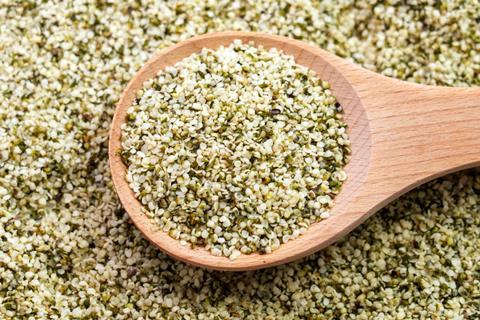
Hemp hurd-based biocomposites could be a viable alternative to fossil-based plastics and provide an environmentally sustainable packaging option, research suggests.
The material, usually discarded over commercially-favoured hemp fibres, showed promise in a Korean study to create lower-carbon packaging films.
The researchers produced hemp hurd microfibres through dry and wet milling followed by micro-fibrillation.
Two prototype products were tested. First packaging films blended with polylactic acid (PLA) and secondly, mulch films blended with starch-based thermoplastic (TPS) and poly(butylene adipate-co-terephthalate) (PBAT).
Adding hemp microfibre improved performance. Tensile strength increased by approximately 20 percent for packaging films and 33 percent for mulch films compared with reference materials.
Manufacturing hemp hurd-based microfibres
In manufacturing these biocomposites, “increasing the proportion of hemp microfibre and incorporating more biopolyesters during manufacturing could enhance carbon savings even more, reducing up to 4.25kg CO2 per 1kg of mulch film in optimised formulations”.
Furthermore, the type of processing chosen during manufacturing significantly affected the final carbon footprint of biocomposites, the study showed. During drying of the microfibres, oven drying was more sustainable than spray drying, “mainly because spray drying required coal combustion and higher electricity demand”.
Lifecycle assessment
Additionally, Poveda-Giraldo et al. conducted a life cycle assessment (LCA) to establish the end-to-end viability of these plant-based biocomposites.
They assessed four scenarios: “incineration with power recovery, incineration without power recovery, industrial composting, and anaerobic digestion, using landfill as the reference scenario”.
[Anaerobic digestion] mitigated approximately 6.1kg of CO2 emissions for every 1kg of mulch film treated, compared to current waste management practices”
Anaerobic digestion “generated the lowest global warming potential because the biogas produced during digestion could be converted into electricity, while the remaining digestate could be used as a soil conditioner”.
This approach “mitigated approximately 6.1kg of CO2 emissions for every 1kg of mulch film treated”, compared to current waste management practices.
“Industrial composting also performed better than incineration, but thermal treatments released significantly higher direct carbon emissions despite electricity recovery”.
Therefore, hemp hurd-based biocomposites are environmentally competitive to petroleum-based plastics when combined with appropriate disposal strategies, according to Poveda-Giraldo et al., supporting lower-carbon production of packaging films.
The paper was published in Journal of Bioresources and Bioproducts.











No comments yet