



The new group will develop pharmacopoeial quality standards for 3D-printed medicinal products, reflecting the technology’s growing role in personalised medicine manufacturing.
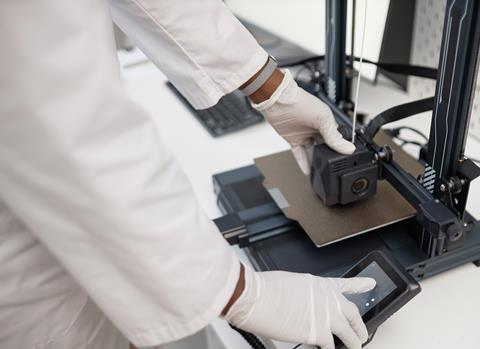
The European Pharmacopoeia Commission (EPC) has approved creation of new 3D-Printed Medicinal Products Working Party (3DP WP).
The new group will assess how to best provide quality standards for 3D-printed medicinal products in the European Pharmacopoeia (Ph. Eur.), supporting safe and effective implementation. Advancing medicines aided by this decentralisation-enabling technology could accelerate pharmaceutical formulation development, particularly for complex dosage forms.
Given the growing demand for 3D printing technologies in the pharmaceutical sector, members will assess the benefit and relevance of these technologies for the Ph. Eur., identify where new pharmacopoeial texts are required or whether existing texts should be revised. Additionally, they will create recommendations for future work.
As novel technologies like AI are gaining traction in the industry, the digitalisation capabilities 3D printing offer can help address the flexibility required to produce individualised medicines. This includes personalising them to fit the needs of different patients, doses, ingredient combinations, release profiles and smaller batches. Ultimately the technology enables reproducible and traceable personalised manufacturing. Moreover, it means scale up is cost-effective because it prevents the over-production of medicines to rationalise a large manufacturing batch.
Industry experts with several years of experience in the field, particularly within the development, manufacture, quality control, assessment or inspection of 3D-printed medicinal products are invited to express their interest in joining the new working group. The EPC also welcomes those with knowledge within development, manufacturing or analytical procedures related to innovative technologies.





No comments yet