



Efficacy findings comparable to those of existing CAR T cell therapies for relapsed/refractory multiple myeloma (r/r MM).
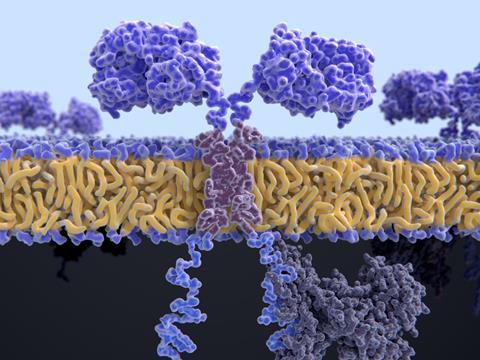
A next-generation manufacturing process can produce a B cell maturation antigen (BCMA)-directed chimeric antigen receptor (CAR) T cell therapy in less than two days, phase I trial findings show.
The new approach significantly shortens the time needed to produce these therapies, which can sometimes take months. Product release testing also poses a significant time burden, as readout can take up to two weeks.
“As wait times for CAR T cell product increase…[it emphasises] the need for faster and more reliable manufacturing for CAR T cell products”.
To address this challenge, Sperling et al. tested the durcabtagene autoleucel cell product. Reducing manufacturing time through next-generation processes can increase throughput.
Designed to preserve T cell stemness, the novel platform removed the need for ex vivo expansion. This produced a final product with greater proliferative potential and fewer exhausted T cells. With the latter being a primary limitation of current CAR T cell therapy, “preserving stemlike characteristics may promote a robust and long-lasting antitumor response in vivo”, the authors noted.
preserving stemlike characteristics may promote a robust and long-lasting antitumor response in vivo”
Additionally, transitioning from clinical to commercial manufacturing “would allow for more working days per week (7 instead of 5), larger capacity, same-day manufacturing initiation upon apheresis sample arrival, and production of more than one batch per day, further reducing the vein-to-vein time”.
BCMA is an antigen overexpressed on multiple myeloma cells and the study evaluated the efficacy of the CAR T cells in patients with relapsed/refractory multiple myeloma (r/r MM).
Results from part A of the study showed an overall response rate of 98 percent in the 55 enrolled patients and a median wait time of 24 days.
Nearly two-thirds of patients avoided potentially toxic and often ineffective, bridging therapy, the paper stated. The efficacy outcomes observed in the trial were similar overall to those observed in trials of ciltacabtagene autoleucel (cilta-cel) and idecabtagene vicleucel (ide-cel), two BCMA-directed CAR T cell therapies approved by the US Food and Drug Administration (FDA) for r/r MM.
While all but one patient experienced cytokine release syndrome (CRS), symptoms were well managed. No unexpected side effects or signs of neurotoxicity were reported. “This is particularly noteworthy, given that during clinical trials of cilta-cel and, to a lesser extent, ide-cel, multiple incidences of Parkinsonism and other delayed neurotoxicity”.
No changes in the percentages of T cell subsets between the apheresis material and final products were observed, according to the paper. This indicates “that the next-generation manufacturing process preserves the characteristics of the starting material and does not induce further differentiation of the T cells”.
The need for fewer cells may make it easier to collect sufficient T cells from patients, the authors remarked.
However, while the phase I study was “relatively small”, so the outcomes limit the strength of conclusions drawn for individual doses, an ongoing phase II trial is further exploring the efficacy and safety of durcabtagene autoleucel in heavily pretreated patients with r/r MM.
The paper was published in Science Translational Medicine.








No comments yet