


Study findings could provide an alternative production platform for rhododendron-derived drugs with potent anticancer and anti-HIV properties.
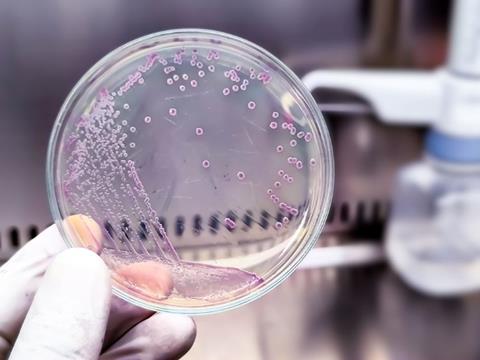
An orsellinic acid-based high-producing E. coli strain has been developed that could facilitate production of pharmacologically-relevant compounds, according to research by bioengineers in Japan.
Such compounds includes grifolic acid, which has anticancer and analgesic properties. The rhododendron plant naturally produces a class of compounds called orsellinic acid-derived meroterpenoids, but their natural origin means they are unreliable and expensive to produce.
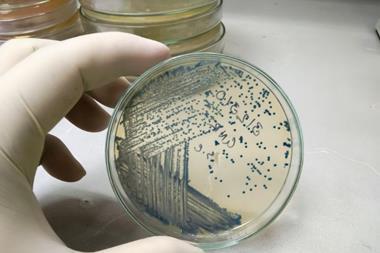
To remedy this, the Kobe University researchers sought to create the first industrial-scale production platform for these compounds based on the bacterium E. coli., which is not a natural producer of orsellinic acid.
Tomita et al. introduced a further gene from rhododendron that completed the grifolic acid biosynthesis.
According to Tomita et al., the platform achieved a production of 202mg orsellinic acid per litre, a 40-fold improvement to previously reported microbial production.
It is a significant achievement that we recreated a complex eukaryotic biosynthetic pathway in the bacterium E. coli, something that was previously thought difficult"
However, the grifolic acid yield was low, meaning it is not yet suitable for industrial production. Yet the study is the first to demonstrate production of the core compound produced in E. coli.
The study’s first author, Itsuki Tomita, said: “It is a significant achievement that we recreated a complex eukaryotic biosynthetic pathway in the bacterium E. coli, something that was previously thought difficult.”
Tomohisa Hasunuma, final author, explained: “In the short term, the platform established in this study can be immediately applied to the production and evaluation of related compounds and their derivatives. However, the rational design strategy employed here serves as a foundational technology for the production of various complex compounds using E. coli.”
Tomita et al indicated that to optimise results, future research should focus on development novel enzymes that can be readily expressed in E. coli.
The paper will be published in Metabolic Engineering.