



Download this report to learn how integrated digital systems can improve data integrity and support higher levels of quality management maturity in regulated manufacturing environments.
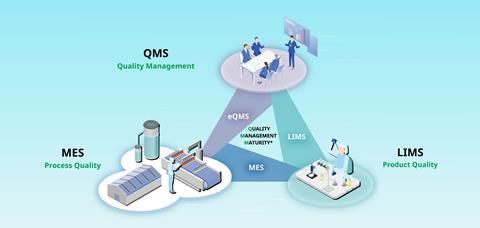
In the context of Industry 4.0, quality is no longer a downstream control activity but a strategic, end-to-end capability embedded across the entire product lifecycle.
Technologies such as artificial intelligence, the Internet of Things (IoT), advanced analytics and digital twins are enabling manufacturers to move from reactive quality management to more predictive and preventative approaches.
However, many organisations continue to face challenges including limited visibility into quality issues, fragmented systems, operational silos and increasing regulatory pressure.
In this report you will:
- Explore how quality management is structured in the context of Industry 4.0
- Examine how digital technologies support predictive and preventative quality approaches
- Assess the concept of Quality Management Maturity (QMM) and its impact on performance
- See how integrating QMS, MES and LIMS supports data integrity and end-to-end traceability
- Review how the Tri-Integrity model enables a more connected quality infrastructure.
Achieving higher levels of quality maturity requires an integrated approach. The Tri-Integrity model brings together QMS, MES and LIMS to support data integrity, traceability and ALCOA+ compliance across manufacturing, quality control and quality assurance.
By reducing data silos and improving system integration, manufacturers can enhance decision-making, reduce compliance risks and support more consistent operational performance.
Download Yokogawa’s report to explore how the Tri-Integrity model supports quality management maturity in regulated industries.
Download Now
Smart manufacturing and beyond: the Tri-Integrity and the support to quality management maturity for Industry 4.0.
PDF, Size 5.08 mb











No comments yet