

US agency is set to see another new face take the helm, following Dr Prasad’s departure at the end of April.
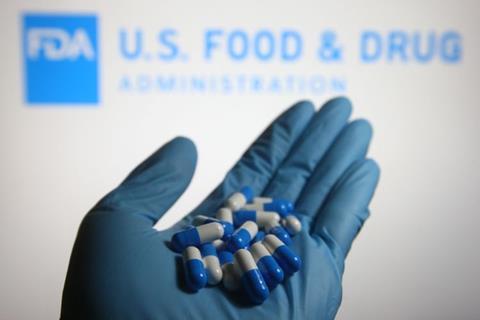
FDA’s Center for Biologics Evaluation and Research (CBER) will see a change to its leadership for the second time in seven months.
Dr Vinay Prasad is again leaving as the group’s director, this time at the end April when he will return to the University of California San Francisco (UCSF).
FDA Commissioner, Dr Marty Makary, said on X: “A year ago, Dr Vinay Prasad came to the FDA to implement four major long-lasting reforms: 2-to-1 pivotal trial requirement, national priority reviews, a risk-stratified covid vaccine framework, and the new plausible mechanism framework for ultra rare diseases which we launched last week.”
A year ago, Dr Vinay Prasad came to the FDA to implement four major long-lasting reforms: 2-to-1 pivotal trial requirement, national priority reviews, a risk-stratified covid vaccine framework, and the new plausible mechanism framework for ultra rare diseases which we launched last week"
He first resigned from the role last summer, following a three-month stint, and then the day after the FDA green lit restarting shipments of DMD gene therapy drug Elevidys, on 11 August, Dr Prasad returned as the CBER’s head.
In the interim, Dr George Tidmarsh briefly led both the CBER and Center for Drug Evaluation and Research (CDER) Director. Then in November, Dr Richard Pazdur was named as George Tidmarsh’s replacement as CDER director. However, only a month later, the FDA announced Dr Tracy Beth Høeg would become its new director, prior to Dr Pazdur’s retirement at the end of 2025.
Dr Prasad’s tenure last year involved dispute about regulatory approval of uniQure’s Huntington’s disease gene therapy AMT-130, after promising clinical data was released in September.
Amid these staffing changes, the FDA last month drafted new guidance for ultra-rare disease approvals.
At the time, Dr Prasad said: “After 25 years the FDA has, for the first time, outlined a framework to facilitate these approvals. The Plausible Mechanism Framework is a revolutionary advance in regulatory science.”
Additionally, Marty Makary and Dr Prasad announced new clinical guidelines in the US. This would see the FDA by default requiring one adequate and well-controlled study, alongside confirmatory evidence to sign off approvals for drugs and biologics.