




Discover how PYROSTAR™ Neo+ supports stable negative control (NC) performance for sensitive and precise recombinant endotoxin testing.
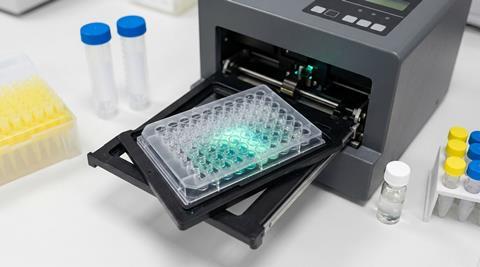
As laboratories explore more sustainable alternatives to conventional LAL methods, this webinar will examine how NC stability can influence assay reliability, result interpretation and the measurement of low endotoxin concentrations.
Join Yannic Werner, EMEA Manager and Pyrogen & Endotoxin Specialist at FUJIFILM Wako Chemicals Europe GmbH, as he presents study findings comparing recombinant reagents with different levels of NC stability. The session will also explore test and validation data evaluating equivalence with conventional LAL reagents.
What will you learn?
- Why NC stability matters for reliable recombinant endotoxin testing
- How recombinant reagents are addressed within major pharmacopoeias
- How recombinant and conventional LAL reagents compare in analytical performance
- Key considerations for equivalence evaluation and method validation
- How PYROSTAR™ Neo+ supports stable NC performance
Gain practical insights into the evaluation and validation of recombinant endotoxin detection reagents and support a smoother transition from conventional LAL methods.
Who should attend?
This webinar is particularly relevant to:
- Quality Control and Quality Assurance professionals
- Pharmaceutical microbiologists
- Endotoxin and pyrogen testing specialists
- Analytical method development and validation teams
- Regulatory and compliance professionals
- Laboratories considering recombinant endotoxin testing

Yannic Werner, EMEA Manager – Pyrogen & Endotoxin Specialist
Yannic Werner studied at the Hochschule Niederrhein in Krefeld, where he completed his Bachelor and Master in chemical engineering. Since 2021, he has been specialized on endotoxin and pyrogen testing as a Sales Manager at FUJIFIM Wako Europe GmbH.
Is the panel discussion free?
Yes – there is no charge to watch the panel discussion, either live or on-demand.
When will the panel discussion take place?
The webinar will be taking place on 11th November 2026 at 3 pm BST.
Can I watch it later?
The panel discussion will become available to watch on-demand shortly after the live webinar takes place.
What are the benefits of attending live?
You’ll be able to ask the speakers your questions, which will be answered live in the Q&A towards the end of the session.
How long will the panel discussion be?
This panel discussion will last up to an hour.
What do I need to watch this panel discussion?
All you need is a computer with an internet connection. We recommend using headphones if possible if you’re in an office environment.