
The 2026 Nobel Prize in Physiology or Medicine award celebrates a key advancement in neuroscience following breakthrough findings from a 2005 research paper.

The Nobel Prize in Physiology or Medicine 2026 honours the discovery of light-gated ion channels and optogenetics, a method that involves controlling individual nerve cells with light.
The joint prize recipients are Karl Deisseroth, The Howard Hughes Medical Institute and Stanford University, US, Peter Hegemann, Humboldt University of Berlin and Georg Nagel, University of Würzburg, Germany.
Following publication of their research findings in Nature Neuroscience in 2005, optogenetics has enabled, according to Svenningsson, Chair of the Nobel Committee for Physiology or Medicine: “mapping the brain in a way that we could once only dream of”.
“[optogenetics can enable] mapping the brain in a way that we could once only dream of”
Svenningsson, Chair of the Nobel Committee for Physiology or Medicine
Fundamentally, optogenetics enables neural circuits to be studied very precisely. Alongside its potential in vision restoration, optogenetics could lead to improving treatments for brain injury/stroke, as well as depression and addiction. For the latter conditions, the technique allows for the study of how individual brain cells influence behaviour, memory and emotion.
In 2000, Peter Hegemann and Georg Nagel discovered the protein channelrhodopsin, in a single-celled alga. Karl Deisseroth transformed the protein into a light-controlled switch for nerve cells from rats. Illuminating them with blue light opened a channel that allow charged ions to flow into the cell, creating an electrical impulse.
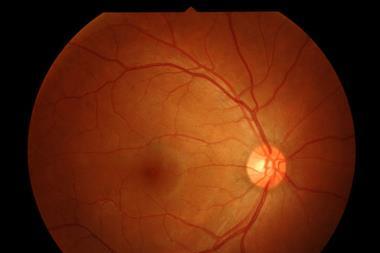
Since then, clinical researchers have already made progress in harnessing the potential of optogenetics, for instance, attempting to restore sight in people with visual impairment.
Participating companies include Nanoscope Therapeutics’, of which one of the drugs they are advancing is their optogenetic gene-agnostic therapy, Mogenry (sonpiretigene isteparvovec) in retinal disease. The drug has already shown potential in a Phase II study of the genetic eye condition Stargardt disease (juvenile macular dystrophy). Moreover, topline data for the STARGAZE Phase III study are expected in 2027.






No comments yet