



Joint recommendations out a phased roadmap for single unit barcoding of medicines across Europe, aimed at reducing medication errors at the point of care.
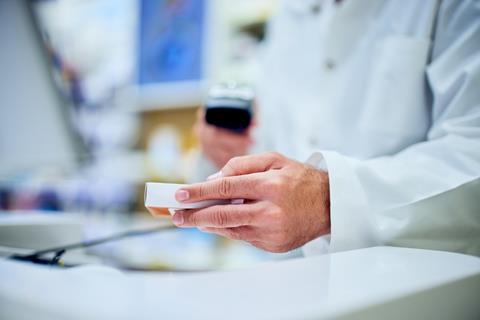
New joint guidance by two industry bodies is set to change how medicine packaging is barcoded in Europe, making products individually identifiable, through Single Unit Coding.
The recommendations published by the European Federation of Pharmaceutical Industries & Associations (EFPIA) and The European Association of Hospital Pharmacists (EAHP) and are intended to reduce the number of medication errors, ensuring patients receive the right dose of the right medication, eg, through pharmacist dispensing.
The guidance includes an implementation plan describing a single unit code that displays information enabling identification of a product (GTIN product code), expiry date and batch/lot number. The guidance follows studies by pharmacists showing that bedside scanning can significantly reduce medication errors by between 30 percent and 60 percent.
Nenad Miljković, EAHP President said: “EAHP welcomes the joint guidance on single unit barcoding as an important step forwards in reducing medication errors and adverse events. We thank EFPIA for their collaboration and commitment to the implementation of this important guidance.”
Currently, original packaging may display a barcode, whereas for individual doses this often not the case. Printing barcodes on each individual vial, blister or pre-filled syringe can reduce error rates by up to 41 percent, according to research published in NEJM.
Over the next five years, all new medicines will include a barcode on every dose”
Nathalie Moll, EFPIA Director General
Nathalie Moll, EFPIA Director General said: “Over the next five years, all new medicines will include a barcode on every dose. This will support better use of healthcare resources, including healthcare professionals’ time, and will deliver real advances in patient care.”
While the new approach will be phased over 15 years, half of hospitals in Europe will have access to bedside code scanning by 2032, increasing to 80 percent by 2036. For new medicines, the change will apply from 2031.



No comments yet