



New EU authorisation gives monoclonal antibody potential as new standard of care for the chronic skin condition.
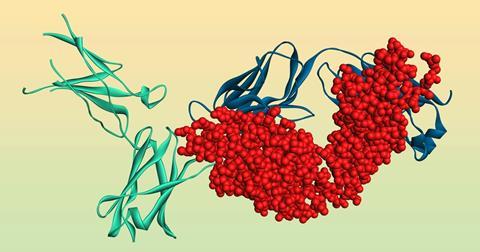
Sanofi and Regeneron’s Dupixent (dupilumab) is the first targeted medicine to be approved in Europe for children aged two to 11 years old with chronic spontaneous urticaria (CSU).
This follows authorisation of the monoclonal antibody injection last November as the first new medicine approved for EU patients with the condition in a decade. This also follows the drug’s earlier US approval last April.
The European Commission latest approval means the biologic is available for children with inadequate response to histamine-1 antihistamines (H1AH) and who are naïve to anti-immunoglobulin E (IgE) therapy for CSU.
[Dupixent] provides a first-of-its kind approach to addressing chronic spontaneous urticaria in young children”
Dr Alyssa Johnsen, PhD, Global Therapeutic Area Head, Immunology Development, Sanofi, said: “Dupixent, which inhibits signalling of IL4 and IL13, two of the key and central drivers of type 2 inflammation, provides a first-of-its kind approach to addressing chronic spontaneous urticaria in young children.”
It represents the fourth Dupixent approval for individuals younger than 12 years old with chronic diseases driven in part by type 2 inflammation.
The EC’s decision is based on data from the LIBERTY-CUPID programme. An extrapolation of efficacy data from two phase 3 studies (Study A and Study C) found that Dupixent significantly reduced urticaria activity compared with placebo in adults. The approval is also based on findings from the phase III CUPIDKids study.
Dr George Yancopoulos, PhD, Board co-Chair, President and Chief Scientific Officer at Regeneron, said: “As the first and only targeted medicine for young children in the EU with CSU, Dupixent has the potential to become the new standard of care for those who remain symptomatic despite other available treatments.”
Dupixent is authorised for other indications in eligible patients including atopic dermatitis, asthma, chronic rhinosinusitis with nasal polyps, eosinophilic esophagitis and prurigo nodularis.















No comments yet