
Innovative radiopharmaceuticals demonstrated “highly promising” survival benefit in study of participants with end-stage solid tumours.

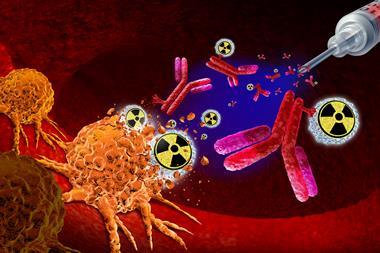
A novel radiopharmaceutical therapy targeting fibroblast activation protein (FAP) has demonstrated potent anti-cancer activity across 21 different types of advanced metastatic solid tumours, results from an early-phase trial show.
The study assessed treatment response and survival in 88 patients given either 177Lu-, 90Y-, or 225Ac-3BP-3940 FAP radiopharmaceutical therapy. According to Baum et al., “the observed survival benefit appears to be highly promising”. The treatments were well tolerated and enabled a median overall survival of seven months.
Objective responses were reported in approximately 66.7 percent of patients and disease control in over 80 percent. Two cycles of therapy facilitate the following responses: complete remission (3.0 percent), partial remission (51.5 percent), stable disease (15.2 percent), and progressive disease (30.3 percent).
Dr Richard Baum, PhD, Professor at Curanosticum Wiesbaden-Frankfurt in Germany said: “This study included patients with very advanced cancers who had already gone through multiple treatments. “Even in this challenging group, we observed tumour shrinkage or disease stabilisation in many cases.
“For patients who have run out of options, this kind of therapy can make a meaningful difference, not only in controlling the disease but also in maintaining quality of life.”
Dr Jingjing Zhang, PhD, Assistant Professor at the National University of Singapore, added: “What makes this work exciting is that we’re no longer limited to treating just one cancer type. By targeting the tumour microenvironment itself, we’re seeing meaningful responses across many cancers, even in patients with few remaining options. This could open the door to a new generation of radiopharmaceutical therapies that are much more broadly applicable.”
By targeting the tumour microenvironment itself, we’re seeing meaningful responses across many cancers…this could open the door to a new generation of radiopharmaceutical therapies that are much more broadly applicable”
Dr Jingjing Zhang, PhD, Assistant Professor at the National University of Singapore
The paper published in Journal of Nuclear Medicine.
In April, Regeneron and Telix Pharmaceuticals partnered in a major collaboration deal worth a potential $4.3 billion, to develop next-generation radiopharmaceutical therapies for hard-to-treat cancers.





No comments yet