



Discover how intelligent digital PAT can improve measurement reliability, enable process intensification and advance Pharma 4.0 biomanufacturing.
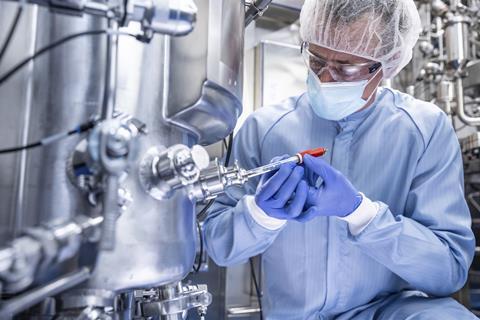
In this article, we explore why and how digital – and particularly intelligent – process analytical technologies (PAT) can enable the next generation of Pharma 4.0 biomanufacturing infrastructures. First, however, it is important to establish why digital technologies represent the logical foundation for future biomanufacturing operations and how intelligent PATs can serve as the eyes and ears of increasingly intensified, high-efficiency production environments.
Where does biomanufacturing stand today?
Biomanufacturing – and biopharmaceutical production in particular – faces significant challenges. On one hand, demand continues to grow, creating pressure to expand production capacity. On the other hand, manufacturing costs, especially those associated with regulatory compliance, remain high and can limit access to advanced biopharmaceutical therapies. The path forwards is not necessarily defined by additional capacity alone, but rather by process intensification, increased yields and productivity, and the adoption of lean manufacturing principles.
In this context, the digitalisation of biomanufacturing operations has become increasingly important. The question is how to achieve it effectively.
As in other manufacturing environments, process automation is a key driver of operational efficiency. However, highly automated facilities cannot continue to rely on analog infrastructure. Analogue systems are labour-intensive and cumbersome, while paper-based records can be misplaced, damaged or altered, increasing the risk of both human and systematic errors. Activities such as calibration, recalibration, maintenance, data recording and, in some cases, data acquisition are still frequently performed manually and documented on paper.
As in other manufacturing environments, process automation is a key driver of operational efficiency.”
These practices require significant labour resources and place a considerable burden on skilled technicians. Wherever manual intervention is necessary, the potential for human and procedural errors increases. Consequently, reducing manual activities and advancing towards higher levels of automation supports the goals of Pharma 4.0 while promoting lean manufacturing principles.
Digital is the obvious next step. Why?
Achieving these objectives is not possible without digitalisation. The majority of biomanufacturing control infrastructure is already digital. Biocontrollers and data acquisition platforms, for example, have largely transitioned away from analogue technologies. However, at many critical process measurement points, including inline, in situ, online and at-line applications, both digital and analogue technologies continue to coexist.
The remaining analogue infrastructure should be replaced with digital alternatives since analogue signals are inherently more susceptible to environmental influences such as vibration and moisture.”
The remaining analogue infrastructure should be replaced with digital alternatives since analogue signals are inherently more susceptible to environmental influences such as vibration and moisture. As a result, signal-to-noise ratios, data integrity and measurement reliability are often inferior to those of digital systems. Even the way control systems are wired can affect the reliability and precision of process control.
Consider an inline pH measurement point. The raw signal generated at the sensing element is an analogue millivolt signal. In traditional analogue sensors, this signal is transmitted directly through the cable to a transmitter or biocontroller. The connecting cable effectively becomes a high-impedance communication path that can be influenced by mechanical disturbances, electromagnetic interference, moisture at connection points and other environmental factors.
When that same millivolt signal is converted into a digital communication protocol, many of these sources of measurement uncertainty are eliminated. The result is improved measurement reliability and data integrity. For this reason, digital sensors offer clear advantages over their analogue counterparts and are increasingly becoming the preferred option for modern biomanufacturing environments.
How do we go digital?
The first step is straightforward: integrate a microprocessor into the sensor head and convert the raw analogue signal into a digital one. However, the capabilities of such a microprocessor extend far beyond simple analogue-to-digital conversion.
Its true value lies in adding intelligence to the measurement system. This intelligence becomes possible when communication between the sensor and the transmitter or biocontroller is no longer limited to a one-way transfer of measurement data but instead becomes a two-way communication process.
Returning to the example of an inline pH sensor, the microprocessor in the sensor head can monitor and evaluate multiple secondary measurement parameters in addition to the primary pH or oxidation-reduction potential (ORP) measurement. Examples include reference impedance, glass impedance, response time, calibration slope, offset and zero point.
Importantly, these parameters are measured continuously under actual process conditions, just like the primary process variable itself. As a result, they provide dynamic diagnostic information that helps explain how the measurement is being generated and how process conditions may influence measurement performance. Since process conditions change over time, these diagnostic parameters also change, providing valuable insight into sensor condition and measurement quality.
Consider a pH sensor installed in a bioreactor following calibration and sterilisation. At the beginning of the process, the broth is relatively clear, cell density is low, metabolic activity is limited and the ionic environment is stable. As the culture progresses through the lag, log and stationary phases, cellular activity increases, proteins and other biomolecules accumulate, and the broth becomes increasingly complex and turbid. These changes affect both the measurement environment and the performance of inline sensors, including pH sensors.
A useful example is the reference junction of a pH electrode. Typically constructed from a porous ceramic material, this component serves as a salt bridge that supports continuous pH measurement. As the bioprocess progresses, appropriately sized biomolecules generated by the growing cell population can accumulate within the porous ceramic structure. This fouling can restrict ionic exchange between the internal electrolyte and the process medium, resulting in longer response times and contributing to measurement drift.
Sensor drift is a significant concern in biomanufacturing processes because it can compromise measurement accuracy and process control. However, the dynamic diagnostics available in intelligent digital sensors make it possible to monitor and even anticipate such conditions. As fouling develops in the ceramic junction, for example, the sensor’s reference impedance increases. These changes can be detected by the sensor electronics and incorporated into alarm and maintenance systems, providing early indication that the underlying measurement conditions are changing and that sensor performance may be affected.
Similar diagnostic capabilities are available in inline dissolved oxygen, carbon dioxide and metabolite sensors, among others. These advanced features can be enabled through the integration of a relatively inexpensive microprocessor within the sensor head. The key enabler is the communication protocol that supports two-way communication between the sensing element and the onboard electronics.
METTLER TOLEDO Intelligent Sensor Management (ISM™) technology provides these advanced diagnostic and predictive capabilities with minimal additional cost. The opportunity now lies in fully leveraging these capabilities to support process intensification initiatives and accelerate progress towards Pharma 4.0 and integrated continuous biomanufacturing objectives.











No comments yet