European Pharmacopoeia adopts a new chapter for the analysis of N-nitrosamine impurities
The new general chapter (2.5.42) outlines three procedures for the analysis of N-nitrosamine impurities in active substances.
The European Pharmacopoeia (Ph. Eur.) Commission has adopted a new general chapter (2.5.42) on the analysis of N-nitrosamine impurities in active substances.
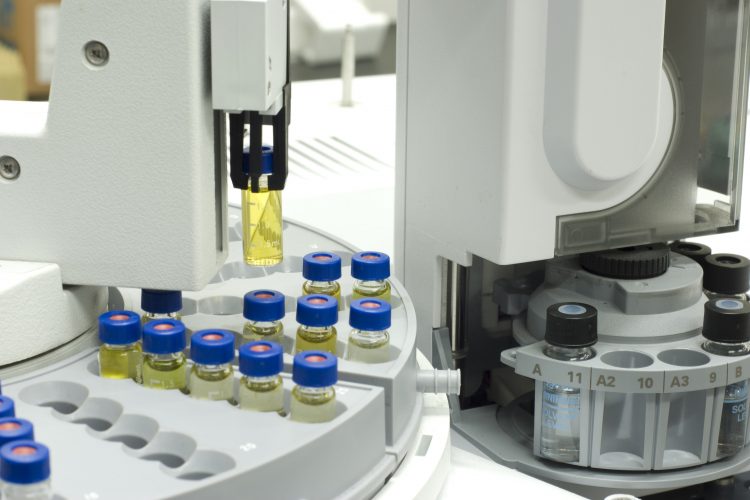
The Commission said the chapter “should be seen as an analytical toolbox” and outlines three procedures, relying on instruments with different levels of sophistication, for identifying N-nitrosamine impurities: gas chromatography-mass spectrometry (GC-MS), liquid chromatography with tandem mass spectrometry (LC-MS/MS) and gas chromatography with tandem mass spectrometry (GC-MS/MS). It added that it was important to include a varied set of procedures using different instruments because of the “diverse needs” of many quality control laboratories in Europe.
The procedures have been validated for the listed active substances, either as a limit test with a target concentration of 30ppb or as a quantitative test. The general chapter focuses mainly on the analysis of N-nitrosamine impurities in angiotensin-II-receptor antagonists (sartans) containing a tetrazole group, five of which have Ph. Eur. monographs (valsartan, losartan potassium, candesartan cilexetil, irbesartan and olmesartan medoxomil). According to the Commission, users may apply the given procedures to other substances or to medicinal products after having demonstrated the suitability for the intended purpose with additional validation.
The three procedures cover a total of seven N-nitrosamine impurities: N-nitroso-dimethylamine (NDMA), N-nitroso-diethylamine (NDEA), N-nitroso-dibutylamine (NDBA), N-nitroso-N-methyl-4-aminobutyric acid (NMBA), N-nitroso-diisopropylamine (NDiPA), N-nitroso-ethyl-isopropylamine (NEiPA) and N-nitroso-dipropylamine (NDPA).
The commission said that the chapter does not present an exhaustive list of analytical procedures for testing N-nitrosamine impurities, so – depending on the analytical challenge and on the testing needs – other validated procedures may be more appropriate.
The chapter has been made available on the European Directorate for the Quality of Medicines & HealthCare (EDQM) website and will be published in Ph. Eur. Supplement 10.6 in July 2021.
In order to support the implementation of the general chapter, seven reference standards have been established and are available from the EDQM. See the table below to find the catalogue code for the standard you need:
Name of the CRS | Catalogue code |
N-nitroso-dibutylamine | Y0002261 |
N-nitroso-diethylamine | Y0002258 |
N-nitroso-diisopropylamine | Y0002263 |
N-nitroso-dimethylamine | Y0002259 |
N-nitroso-dipropylamine | Y0002264 |
N-nitroso-ethyl-isopropylamine | Y0002262 |
N-nitroso-N-methyl-4-aminobutyric acid | Y0002260 |








Attention is being paid to N-nitrosamine impurities because someone discovered them.
This may be a convenient distraction from the likelihood that other DNA-reactive impurities may remain to be discovered, for lack of a compendial general test.
Furthermore, drug substances known to be DNA-reactive (or that have reactive metabolites) are still being marketed. For example, nitrofuran antibiotics are prohibited for the treatment of farm animals but are still prescribed for humans.
The pharmacopeias should consider introducing a general test for reactivity with DNA, or else explain why they do not consider that necessary.