


Could new 3D material advance drug delivery?
Posted: 6 December 2022 | Catherine Eckford (European Pharmaceutical Review) | No comments yet
Researchers have developed a new 3D covalent organic framework material which has potential to offer efficient extended-release drug delivery.
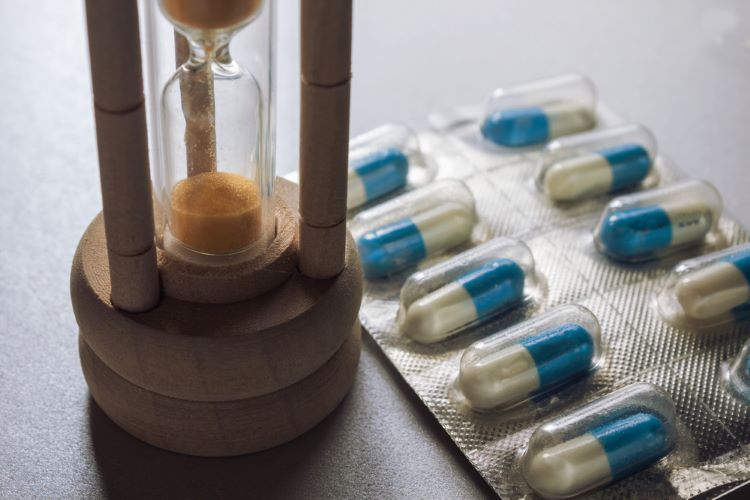
Japanese researchers have created TUS-84, a new three dimensional (3D) covalent organic framework (COF) with scu-c topology for the first time, a material which could facilitate efficient, extended-release drug delivery. The study was published in ACS Applied Materials & Interfaces.
The new generation of porous solids are porous organic materials produced from linking molecular building blocks with strong covalent bonds into crystalline, extended, net-like reticular 3D structures.
Potential of the new 3D covalent organic framework material
The synthesised 3D COF demonstrated excellent hydrogen, carbon dioxide, and methane adsorption properties in the study. The researchers found TUS-84 enabled extended drug release performance of about 35 percent after 5 days using ibuprofen, a common nonsteroidal anti-inflammatory drug. The research states that due to ibuprofen having a short half-life (1.8–2.0 hours), extended-release formulations and pore dimensions of TUS-84 (1.05 nm) are needed for encapsulation of ibuprofen with molecular size of 0.5 × 1nm.
In comparison with the ibuprofen release rates of 78 percent for cage-based crystalline covalent organic framework (Cage-COF-TT) and 49 percent for PI-COF-5, respectively, after 12 hours, a considerably slower release rate of 24 percent was observed for TUS-84 after 12 hours. The research findings hold potential for lower dose frequency and more consistent control of long-lasting, chronic pain could be possible, note the researchers.
“In this study, we have succeeded for the first time in creating a 3D COF with scu-c topology (network structure) by connecting nodes of a regular plane (4-connected) with nodes of a regular prism (8-connected). This new COF, TUS-84, has a double interpenetrating structure with well-defined voids,” observed Professor Negishi.
More detailed studies of TUS-84 for drug delivery, assessed the loading and release of captopril. Thermogravimetric analysis (TGA) trace of captopril-loaded TUS-84 revealed 16 weight percent loading of captopril in TUS-84. The majority of the captopril was released from TUS-84 after about 5 days, with total delivery reaching about 98 percent of the total captopril loading.
Researchers involved in the 3D COF study were Professor Yuichi Negishi from the Department of Applied Chemistry, Faculty of Science, Tokyo University of Science, Japan, and colleagues in the Department of Applied Chemistry, Tokyo University of Science, Dr Saikat Das, Taishu Sekine, and Haruna Mabuchi.
Related topics
3D printing, Biopharmaceuticals, Drug Delivery Systems, Drug Manufacturing, Research & Development (R&D), Technology, Therapeutics
Related organisations
Related people
Dr Saikat Das, Haruna Mabuchi, Professor Yuichi Negishi, Taishu Sekine


![Roche logo sign lit up [Credit: testing/Shutterstock.com].](https://www.europeanpharmaceuticalreview.com/wp-content/uploads/Roche-3-400x187.jpg)