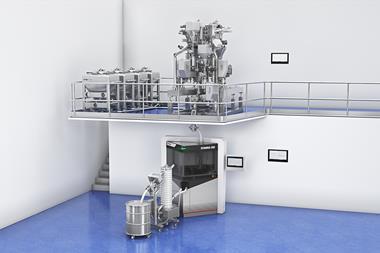



Novel approach holds potential to reduce the industry’s dependence on coconut and palm oil extraction for bioproduction of short- and medium-chain fatty acids.
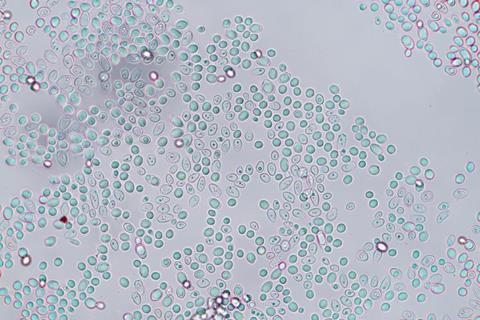
A novel approach to high specificity production of medium-chain fatty acids in yeast could offer a sustainable alternative to traditional methods, while also enhancing microbial biosynthesis of fatty acids.
Most of the fatty acids currently used to produce pharmaceuticals are extracted from coconut and palm oils, but controlling the exact desired chain length has historically been challenging.
Consequently, developing ‘eco’ fatty acid alternatives with high purity and precise chain-length control is a key objective for the industry and one that a joint team of researchers in China and Germany are seeking to tackle.
In their study, Ludig et al. engineered metazoan fatty acid synthase (mFAS) to precisely control fatty acid chain length. Their work also involved constructing an efficient yeast cell factory using XMCFA69, an engineered Ogataea polymorpha (O. polymorpha) yeast strain.
While β-oxidation is... often suppressed in metabolic engineering strategies for [short- and medium-chain fatty acids] production, we demonstrate its utility as a tunable mechanism for refining product chain length profiles in yeast"
A key part of the process was enhancing both product specificity and titer of the yeast strain through targeted modulation of β-oxidation, which was “a central concept in our engineering strategy”, Ludig et al. explained.
“While β-oxidation is typically viewed as a catabolic process and often suppressed in metabolic engineering strategies for [short- and medium-chain fatty acids] production, we demonstrate its utility as a tunable mechanism for refining product chain length profiles in yeast.”
Results showed that the engineered yeast strain demonstrated a “medium-chain fatty acid titer of 708.6 mg/L, with (C12) accounting for 48 percent of the total products”, comparable to levels found in coconut and palm kernel oils.
Overall, the innovation has potential in sustainable chemical manufacturing and provides a “viable alternative to plant-based fatty acid extraction”, according to one of the co-authors, Professor Yongjin Zhou.
This research was published in Nature Chemical Biology.