




news
EMA and FDA issue joint AI guidance for medicine development
The regulators’ 10 principles aim to support pharma companies with evidence generation and monitoring for new medicines.
List view / Grid view
The regulators’ 10 principles aim to support pharma companies with evidence generation and monitoring for new medicines.


Digital twin model offers potential for advanced control during continuous pharmaceutical manufacturing processes.
US approval of the subcutaneous therapy provides a novel chemotherapy-free frontline option in EGFR-mutated NSCLC.


EpiVax and Cubrc research supports FDA guidance on impurity risk assessment in generic peptides.
The FDA’s latest authorisation makes it the most widely approved of any CD19-directed CAR T therapy in cancer.
As well as the new safety warnings for the Duchenne muscular dystrophy gene therapy, the biopharma company also faced a new, more restrictive licence for the treatment.
The FDA-veteran and oncology specialist will lead the US drug agency’s work ensuring the safety and efficacy of medicines.
US agency follows in footsteps of European Medicines Agency (EMA) in efforts to streamline biosimilar development.
Sets bioequivalence and active pharmaceutical ingredient (API) requirements for its new ANDA prioritisation programme.


The regulator’s new principles aim to ease the pathway to regulatory approval for rare disease drug developers in the US.


First-of-its-kind case continues EMA and MHRA harmonisation, streamlining the global biosimilar approval pathway.
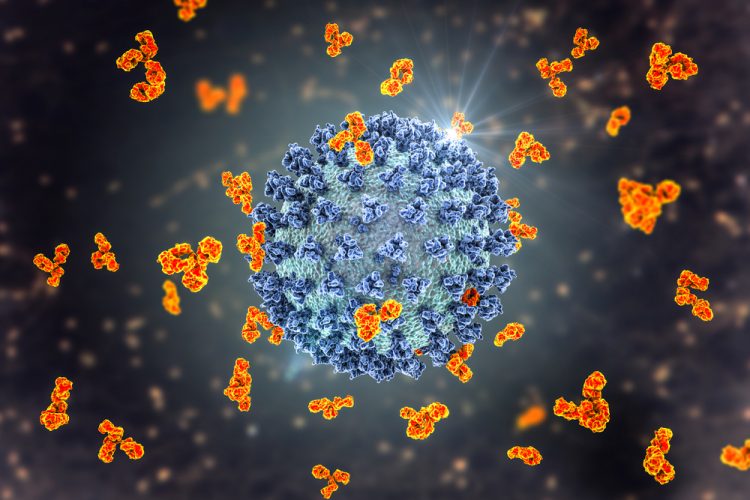
RFK Jr hits Comirnaty, Spikevax and Nuvaxovid with revised approvals for ‘high risk’ individuals.
US regulator says the move to open up the FAERS database will help modernise its safety monitoring.
CBER head makes surprise comeback just weeks after his abrupt resignation.


But the impact of George Tidmarsh’s CBER appointment after Vinay Prasad’s abrupt resignation remains to be seen.

