
Pharmaceutical and chemical manufacturing facilities present some of the most demanding lighting challenges in industry, combining explosive atmospheres, stringent hygiene requirements and complex regulatory requirements. Raytec examines how explosion-protected LED solutions are redefining safety, performance and compliance across hazardous area applications.
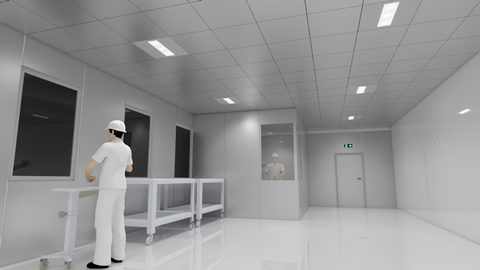
Lighting is essential in chemical industries such as pharmaceuticals, petrochemicals, agrochemicals, and others for various reasons, but primarily for safety and operational efficiency. These industries rely on specialised lighting in laboratories, production sites, storage areas, and workplaces to ensure that tasks are performed accurately and securely.
Chemical manufacturing environments are often classified as hazardous areas due to the presence of raw solvents, chemicals, and by-products. Many of these substances are highly flammable, volatile, or reactive, posing significant risks of fires, explosions, or toxic exposure if not managed properly. Therefore, lighting in such environments must meet strict safety standards to prevent accidents.
Specialised lighting solutions, such as explosion-protected safe lighting, are required to reduce the risk of ignition. These lighting systems must be durable, reliable, and resistant to chemicals and environmental conditions present in industrial settings.
Typical applications and the challenges
Let’s look at some applications where hazardous area lighting is deployed, and the common challenges faced by them.
Pharmaceuticals
Pharmaceutical manufacturing facilities are classified as hazardous areas due to the presence of raw solvents, chemicals, gases, and dusts generated during production. Large-scale sites require extensive lighting solutions, including in clean rooms, storage areas, and manufacturing zones. Key challenges include:
- Explosion risks from solvents and gases
- Strict hygiene and cleanroom standards requiring specialised fixtures like Recess Lighting
- Large-scale lighting needs across vast facilities.
Petrochemicals
Petrochemical plants deal with flammable hydrocarbons and chemicals, creating explosive atmospheres where standard lighting cannot be used. Explosion-protected luminaires are essential, and placement is crucial to avoid glare and shadows. Challenges include:
- Explosion risks from volatile chemicals
- Harsh environmental conditions requiring robust lighting solutions
- Optimal light distribution to prevent safety hazards.
Specifying lighting for chemical industries
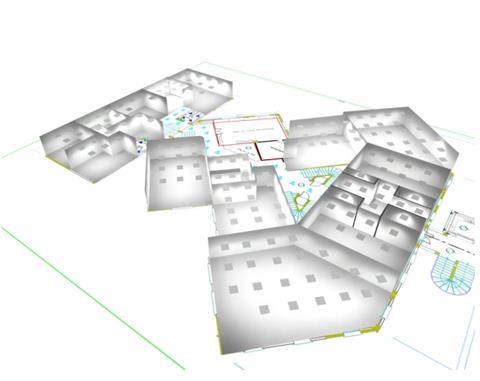
At Raytec, we understand the challenges associated with recessed lighting in hazardous environments and the industry’s need for a versatile, high-performance solution that traditional products have yet to fully address.
Leveraging over 20 years of expertise in specialist lighting, we developed SPARTAN Recess in 2024, a ground breaking innovation engineered to meet the unique demands of recessed applications across industries like those mentioned above. Designed to enhance efficiency, simplify maintenance, and improve safety, SPARTAN Recess sets a new standard for recessed lighting. Here’s how it overcomes key industry challenges.
Challenge 1: Typical recessed lighting is designed around old technology with excess sheet metal, control gear, and ballasts which add a lot of weight on the ceiling and are not required on modern LED fittings. Over time, this added weight can lead to sagging or even structural failure, particularly in environments with suspended modular ceiling panels, such as cleanrooms in pharmaceutical sites, which are not designed to support excessive loads. In sensitive areas, ceiling instability can also compromise sterility, as even minor vibrations, dust displacement, or micro-cracks may jeopardise contamination control and regulatory compliance.
Solution: The SPARTAN Recess is engineered to be 50% lighter than comparable products. This significant weight reduction is achieved through a modular design that minimises the use of excess materials, combined with advanced LED technology. The result is a high-lumen output that maintains energy efficiency while easing installation and reducing the load on the ceiling.
Challenge 2: In chemical installations, controlling the light emitted by luminaires is crucial, as certain wavelengths must either be produced or avoided to prevent unintended chemical reactions.
Solution: The SPARTAN range of recessed luminaires offers customisable wavelength options to meet specific application needs. Additionally, luminaires can be equipped with LED panels featuring different wavelengths, for example, one panel with standard white LEDs and another with red LEDs. These panels can be independently switched on or off as required, providing precise lighting control throughout the process.
Safety shower lighting
Safety is paramount in hazardous work environments. In industries such as pharmaceuticals, chemical manufacturing, and oil and gas, safety showers and eye wash stations are essential for protecting workers. These facilities allow individuals to promptly cleanse harmful chemicals or dangerous residues from their bodies and clothing. To ensure quick and easy identification these stations are equipped with green lights, which are strategically chosen for their effectiveness. Raytec offers specialised lighting solutions for safety showers in hazardous environments, the SPARTAN Safety Shower Linears. These are purpose-designed to be used in and be retrofitted to existing lighting for safety showers.
Emergency lighting
Emergency lighting is essential in chemical industry applications to ensure safety, regulatory compliance, and operational security. In the event of a power failure, these facilities face significant risks due to the presence of hazardous chemicals, including flammable, toxic, or reactive substances. Emergency lighting helps workers navigate safely, reducing the chances of accidents, chemical exposure, or spills. It also plays a crucial role in guiding personnel toward exits and emergency response equipment, such as fire extinguishers and eyewash stations, ensuring a swift and organised evacuation.
Raytec offers emergency variants throughout the SPARTAN and WARRIOR product ranges, with a choice of different lumen output and durations available. The standard emergency offering provides 25% output with 180 minutes of duration, although 50%, 75% and 100% output variants are also available across most products.
Most SPARTAN emergency luminaires are available with 100% light output, ensuring there is no loss of output when switching to emergency mode. This makes the luminaires perfect for pharmaceutical environments or other applications where maximum light levels in emergency mode are critical. Maintaining a high output also means lux requirements can be achieved with a smaller quantity of emergency luminaires, maximising cost efficiency.
Choosing LED
With the sale of traditional T12 and T8 fluorescent tubes banned in August 2023, the need to find alternative solutions to traditional lighting technology is more pressing than ever.
LED luminaires offer several advantages over fluorescent lighting. The two main are:
Performance: Longer life because fluorescent luminaires are more prone to failure compared to LEDs which have a near 0% failure rate. This also means that, unlike fluorescent fittings, there is no requirement for ongoing lamp changes over the course of an LED luminaire’s lifetime. Over time a fluorescent luminaire will also lose almost 40% of its initial lumens. And unlike fluorescent luminaires, LED equivalents are largely unaffected by extreme temperatures, hot or cold.
Light output: The cylindrical design of a fluorescent tube means there will always be some degree of wasted light from a fluorescent fitting. In contrast, an LED luminaire can direct 100% of its output towards the ground where it’s needed. Furthermore, the latest LED luminaires, such as SPARTAN Linear, are available with a choice of secondary optics. These optics can be used for different applications, such as aisle, corridor or perimeter lighting schemes.
Effective lighting is paramount in chemical industries, ensuring both safety and operational efficiency. The presence of flammable materials, volatile chemicals, and potentially explosive atmospheres necessitates the use of specialised, explosion-protected lighting fixtures. By prioritising safety and incorporating energy-efficient solutions, chemical manufacturers can create a safer, more productive, and more sustainable working environment.
For the full application focus and to learn more about lighting design, energy-cost considerations and the complete SPARTAN range, click here.




No comments yet