


Dean Hatt, Senior Toxicology Consultant at CRO Broughton, highlights the impact of cannabis compounds in pharmaceutical products.
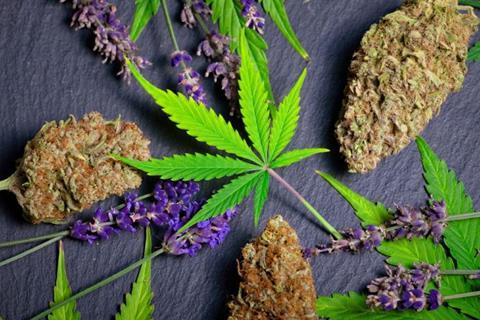
Cannabis is instantly recognisable by its aroma, shaped by citrus, pine, pepper and floral notes layered over a complex chemical profile. Beneath these aromas lies a class of compounds now drawing increased scrutiny within pharmaceutical development. As medicinal cannabis advances further into regulated therapeutic pathways, terpenes are no longer viewed solely as sensory markers, but as active variables with implications for safety, consistency and formulation performance. This article outlines why terpenes require careful risk assessment as cannabis-based medicines move deeper into regulated pharmaceutical frameworks.
Terpenes are naturally occurring aromatic compounds found in many plants. In cannabis, they are produced in trichomes, the same resin glands responsible for cannabinoids such as tetrahydrocannabinol (THC) and cannabidiol (CBD). Similar terpene structures appear in pine, citrus, lavender and pepper, although cannabis contains a particularly diverse and variable terpene profile. Each cannabis cultivar expresses a distinct combination of terpenes, contributing to aroma and flavour while also influencing biological effects.
From a pharmaceutical perspective... diversity introduces a level of chemical variability quite distinct from conventional active pharmaceutical ingredients, where composition is tightly controlled"
More than 200 terpenes have been identified in cannabis, with myrcene, limonene, pinene, linalool and beta-caryophyllene among the most prevalent. From a pharmaceutical perspective, this diversity introduces a level of chemical variability quite distinct from conventional active pharmaceutical ingredients, where composition is tightly controlled.
Growing evidence suggests that terpenes may interact with cannabinoids through what is often referred to as the ‘entourage effect’, wherein compounds modulate each other’s physiological impact. Myrcene has been associated with sedative effects, limonene with mood elevation and pinene with potential mitigation of some cognitive effects linked to THC. While these interactions remain an active area of research, they illustrate why terpenes cannot be treated simply as inert excipients in medicinal cannabis products.
Differentiation brings uncertainty
For producers, terpenes have become central to product differentiation, patient preference and perceived quality. This is particularly evident in more established markets such as North America, where flavour profile and experiential consistency can influence prescribing and patient adherence. However, from a pharmaceutical manufacturing standpoint, this variability introduces challenges around batch-to-batch consistency, specification setting and long-term stability.
Terpenes directly influence sensory attributes such as taste, aroma and smoothness, yet their volatility and chemical reactivity can complicate formulation control. Developers may pursue distinctive terpene profiles to support therapeutic or experiential objectives, while others aim to reduce terpene content to minimise variability. The absence of a clear industry benchmark reinforces the need for systematic, science-led assessment rather than reliance on precedent or anecdotal outcomes.
Quality and safety in formulation
Terpenes are chemically active and can oxidise or degrade during processing, storage or exposure to light and heat. In pharmaceutical manufacturing, these changes can alter not only sensory characteristics but also impurity profiles, raising questions around shelf life, degradation pathways and patient exposure. As a result, terpene content and stability increasingly form part of regulatory submissions, release testing and ongoing quality control programmes.
Risk assessment plays a central role in evaluating terpene safety. This process identifies toxicological hazards, quantifies exposure levels and compares them against established safety thresholds. Importantly, assessments consider both individual terpenes and their combined exposure within a formulation. This cumulative approach aligns with pharmaceutical toxicology principles, recognising that patient exposure rarely occurs in isolation.
Beyond toxicological considerations, terpenes also introduce practical challenges during pharmaceutical manufacture.
Manufacturing considerations
From a formulation perspective, terpenes present challenges that extend beyond toxicology alone. Their lipophilicity, volatility and interaction with packaging materials can influence dosage uniformity, device compatibility and long-term product performance. In inhaled or vaporised products, terpene behaviour during aerosolisation also affects delivered dose and particle characteristics, making early-stage evaluation critical.
For manufacturers scaling from pilot batches to commercial production, maintaining terpene consistency becomes increasingly complex. Small variations in raw material sourcing, extraction conditions or storage can lead to measurable differences in finished product composition. This reinforces the importance of robust analytical characterisation throughout development and manufacture.
Regulatory expectations
[Terpenes] sit at an intersection between flavouring agents, functional excipients and biologically active components, requiring careful justification within regulatory dossiers"
Even for experienced pharmaceutical scientists, terpene chemistry can prove more complex than anticipated. Regulators expect manufacturers to demonstrate control over all constituents that influence safety and performance, regardless of whether those compounds are primary actives. Terpenes therefore sit at an intersection between flavouring agents, functional excipients and biologically active components, requiring careful justification within regulatory dossiers.
As medicinal cannabis products continue to integrate into formal pharmaceutical frameworks, terpene risk assessments are likely to face increasing scrutiny. Clear documentation of toxicological rationale, exposure modelling and formulation control will be essential to support regulatory confidence and patient safety. Early and systematic evaluation of terpene behaviour can reduce uncertainty, support consistent manufacturing outcomes and help ensure that medicinal cannabis products meet the expectations applied across regulated pharmaceutical products.
About the author
 Dean Hatt is Senior Toxicology Consultant at CRO Broughton, bringing over 35 years of industry-leading experience in toxicological evaluation, formulation and analytical strategy to support pharmaceutical product development, safety assessment and regulatory compliance.