



Formulation and drug delivery
Explore formulation science and drug delivery innovations, covering dosage forms, excipients, bioavailability enhancement, controlled release technologies and patient-centric design approaches that support therapeutic performance, product differentiation and treatment outcomes.
Webinars and whitepapers
- Previous
- Next
















Formulation and drug delivery
 Article
European Pharmaceutical Review Issue 2 2026
EPR Issue 2 includes articles on manufacturing, drug formulation, microbiology, downstream bioprocessing, and more.
 Article
Revolutionizing oral bioavailability: powdered lipid surfactants for tablets and capsules
Download this application note to learn how new powder surfactants from Gattefossé can bring the bioavailability-enhancing benefits of lipid excipients to directly compressible tablets and hard capsules.
 Report
The next era of pharmaceutical innovation: from emerging technologies to scalable solutions
Explore seven expert perspectives on the technologies and challenges shaping the future of pharmaceutical development and manufacturing.
 Article
Precision control for target protein degraders
Target protein degraders offer therapeutic potential, yet their high potency, poor solubility and ultra-low administered doses place significant demands on formulation science, analytical capability, containment and scalable manufacture. Successful development requires solubility enhancement, particle engineering, excipient design, high-potency containment and process development to be considered together from the earliest programme stages.
Join now
Unlock exclusive industry insights
- Bookmark articles and resources to access anytime
- Enjoy free access to industry leading resources, webinars and insights
- Stay informed with the latest news and breakthroughs in drug discovery
- Receive updates and recommendations tailored to your research interests
 Article
The next frontier in nitrosamine testing: detection and risk assessment in packaging and IV infusion bags
Join Waters Corporation on the 23rd September for their webinar on the latest developments in nitrosamines testing, evolving regulatory expectations, analytical challenges, and advanced LC-MS/MS strategies for sensitive detection and risk assessment.
 Article
Improving patient-centricity with advanced polymer excipients
Optimal excipient choice can enhance both the therapeutic impact and patient-centricity of oral and parenteral formulations.
 Article
Troubleshooting capping defects in brittle tablet formulations
Cam-driven technology optimises the compaction process by maintaining consistent tablet hardness across turret speeds, enabling robust, scalable manufacturing of capping-prone blends.
 Report
Pharma Horizons: Cell and Gene Therapy
EPR’s 2026 cell and gene therapy report covers the key developments in manufacturing, regulation, drug delivery, process development and beyond.
 Article
Lipid formulation development: why softgels are the technology of choice
With their improved bioavailability and a straightforward manufacturing process, innovative lipid formulations such as softgels offer an attractive alternative to common oral solid dosage (OSD) forms like tablets and capsules, helping to streamline drug development.
 Article
European Pharmaceutical Review Issue 1 (2026): Drug Delivery In-Depth Focus
New pressures in solubility, targeting precision and injectable usability are forcing drug delivery to evolve across formulation, mechanism and delivery method. This In-Depth Focus explores the approaches beginning to reshape performance outcomes across the development pipeline.
 Article
European Pharmaceutical Review Issue 1 2026
EPR Issue 1 includes articles on manufacturing, drug delivery, environmental monitoring, analytical techniques and more.
 Article
Terpenes in medicinal cannabis: a formulation challenge
Dean Hatt, Senior Toxicology Consultant at CRO Broughton, highlights the impact of cannabis compounds in pharmaceutical products.
 Article
ReiThera on vaccines and remaining nimble around emerging threats
As vaccines are buffeted by political pressures, the CDMO discussed its growth approach and some of its key collaborations.
 Article
Literature as data – using large language models to prioritise protein binding pockets
Here, Alan Nafiiev, CEO and founder of Receptor.AI, discusses the benefits of using large language models to integrate literature evidence and structural prediction to accelerate binding site identification.
 Article
European Pharmaceutical Review Issue 4 2025
EPR Issue 4 includes articles on manufacturing, AI/ML, vaccine development, biologics and more.
 Article
Why speed and flexibility matter now more than ever
The balance between speed, scale, and compliance has never been more critical. As GLP-1s, biosimilars, and advanced therapies reshape global priorities, pharma leaders face a new question: how can manufacturing infrastructure evolve fast enough to keep pace?
 Article
Navigating evolving clinical and regulatory expectations as mRNA outgrows its vaccine roots
Jianbo Diao, PhD, Director of Bioanalytical Services, WuXi AppTec, discusses the importance for mRNA therapy developers of adopting precise and flexible analytical strategies for future pipeline success.
 Article
Simplified rAAV lysate purification for complex analytics of upstream samples
Bioprocess experts from Sartorius BIA Separations and BridgeBio Gene Therapy illustrate an approach with potential to expedite AAV upstream analytics and lower overall process development costs.
 Article
Optimising moisture and odour management in pharmaceutical packaging
This article answers some key questions about the need for environmental management in packaging, focusing on moisture and odour control, and the solutions available to achieve it.
 Article
Drug development In-Depth Focus 2025
From groundbreaking cell and gene therapies to cost-effective drug delivery innovations, Europe is emerging as a hub for life-changing therapies. Explore expert insights and innovative solutions shaping the pharmaceutical industry.
 Article
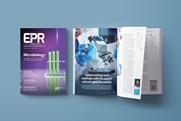
European Pharmaceutical Review Issue 3 2025
EPR Issue 3 includes articles on microbiology, downstream processing, manufacturing, drug formulation and more.
 Article
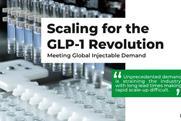
Scaling for the GLP-1 revolution - meeting global injectable demand
In this article, Miguel Angel Ortega Sánchez of ROIS explores how the industry is adapting to new delivery formats, device bottlenecks, and strategic partnership models — and why flexibility, compliance, and tech transfer agility are now critical to success.
 Report
Pharma Horizons: leading-edge formulation
This report addresses the key factors shaping pharmaceutical formulation, including regulation, QC and analysis.
 Article
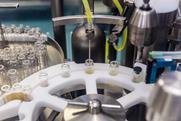
Supporting the pharmaceutical industry – how a CDMO can help
After their recent webinar, European Pharmaceutical Review’s Head of Content Ian Betteridge spoke with the team at Adragos Pharma to discuss the role of a CDMO and their importance in the fill and finish sector.
 Article
A rapid microbiological method case study for advanced therapy medicinal products
In this article, Stacey Ramsey, Senior Manager – Microbial Applications Lab, Charles River Laboratories, discusses the modernisation of rapid microbiological methods (RMMs) and the potential of ATP-bioluminescence when testing cell-based products.
 Article
Alliance for impact - advancing CGT development in Europe
Cell therapy expert Lindsay Davies, PhD, FHEA, discusses the key considerations for moving the needle to broader adoption of CGTs in Europe.
 Report
Streamlining European expansion for cell and gene therapies
Tom Smith, Strategic Director, Cell and Gene Therapies, Uniphar, discusses the essential elements biotechs need for commercial success in Europe’s unique market when developing cell and gene therapies (CGTs).
 Publication
European Pharmaceutical Review Issue 2 2025
EPR Issue 2 includes articles on the impact of tariffs on the pharmaceutical supply chain, advances in bioprocessing, manufacturing and more.