
You are here: Home » Archives for Cleanrooms
Cleanrooms - Articles and news items
Issue 4 2008, Past issues / 2 August 2008 /
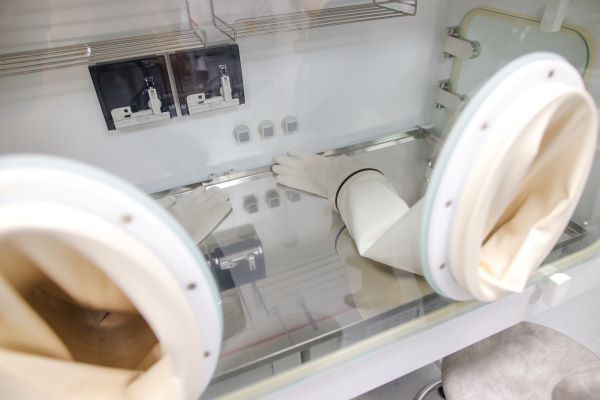
Advanced Aseptic Processing (AAP) is a term referenced in the recently published ISPE RABS definition1 to cover the spectrum of Restricted Access Barrier Systems (RABS) and isolator systems. In general, AAP techniques are physical barrier methods of product protection and containment that are used during manufacturing operations to separate (primarily) operators from the process. These methods are most often used during open processes or other critical process steps to ensure the product is not exposed to viable organisms and particulate contamination. While there are many methods to choose from, there is no argument that AAP techniques are widely used.
(more…)
Issue 1 2008, Past issues / 23 January 2008 /
There are many trends worth reporting in the context of pharmaceutical cleanroom technology: technical as well as regulatory trends. Supporting them is the continuing trend towards worldwide international standards, not only regarding contamination and biocontamination technology, but also regarding related topics such as air filtration. The endeavours for controlling micro-organisms, so competently addressed by the pharmaceutical industry and cleanroom technology, are beginning to spread – and this again is a trend – into further areas of human endeavour such as hospital hygiene. (more…)
Issue 6 2007, Past issues / 23 November 2007 /
Proper and compliant HVAC systems are fundamental to the pharma industry as we use high air change rates to secure a low viable and particle contamination. HVAC is energy consuming and therefore the HVAC accounts for a large proportion of the energy used in pharma facilities. In the past the energy savings issue was not widely acknowledged; managers wanted to see good compliance and high levels of production and spending time to save money; push for greater sustainability was not really welcomed. Now things have changed and there is a readiness to look at these issues, especially when it is proven that GMP and sustainability are not contradicting and on occasions, can go beautifully hand in hand.
When designing facilities with sustainability in mind, we are often met with the assumptions that it means larger investments. But while a sustainability perspective on design in some cases causes increased investments, it can be proven that this perspective can in some areas actually reduce investment costs. In this article, implemented and planned energy savings on a Novo Nordisk aseptic filling plant will be described. Special attention will be given to sub-projects, demonstrating unison in GMP and energy considerations and showing how sustainable design can also mean cheaper design. (more…)
Issue 5 2007 / 21 September 2007 / Karen Rossington, Marketing and Development Manager, Shield Medicare Ltd.
The manufacture of sterile pharmaceutical products is governed in the European Union by the requirements of EU Good Manufacturing Practice for Medicinal Products. The GMP guide gives very specific details on the environmental and microbial requirements for aseptic processing. However, little or no guidance is given on how to create and maintain the correct level of microbial contamination in the aseptic suite. This article focuses on two important issues – creating and maintaining a spore-free environment and preventing spore contamination that may result from the use of disinfectants.
As a disinfectant manufacturer, Shield Medicare offers a useful perspective on the selection and use of disinfectants, as it has an in-depth knowledge of the products and also operates its own cleanrooms to the same cGMP standards as pharmaceutical manufacturers. (more…)
Issue 2 2007, Past issues / 27 March 2007 / John Neiger, Technical writer and consultant
It is some years since the ISO 14644 and 14698 series of international cleanroom standards started taking over from national standards. Early parts are already undergoing their statutory five-year reviews; other parts have only recently been published and new parts are still being written.
(more…)
Issue 2 2006, Past issues / 24 March 2006 / Bengt Ljungqvist, Ph.D. and Berit Reinmüller, Ph.D. KTH Stockholm
To verify that cleanroom and clean zones are adequately installed and functioning they are usually validated during three occupancy states. First, when the installation is complete with all services connected and functioning, as-built; secondly during at-rest conditions when equipment is installed and running in a manner agreed upon by customer and supplier; and finally during operational conditions with the specified number of personnel present and working in a manner agreed upon. This is described in the standard documents of ISO/EN 14644 Cleanrooms and associated controlled environment.
(more…)
Issue 3 2005, Past issues / 22 August 2005 / Dr Hans H. Schicht, Dr. sc. techn., Dr. Hans Schicht Ltd. Contamination Control Consulting
Regulatory guidance documents, such as Annex 1 to the GMP guideline of the European Union1 and FDA’s comparable Guidance for Industry2 establish the objectives to be met by pharmaceutical contamination control systems – especially those for the production of sterile medicinal drugs.
(more…)
Login to access exclusive content