

Ensuring sterility of a novel anti-VEGF bispecific antibody
Posted: 15 May 2024 | Catherine Eckford (European Pharmaceutical Review) | No comments yet
Safety of the compounded biologic was confirmed following 28-day storage in two different polypropylene syringe types, research shows.
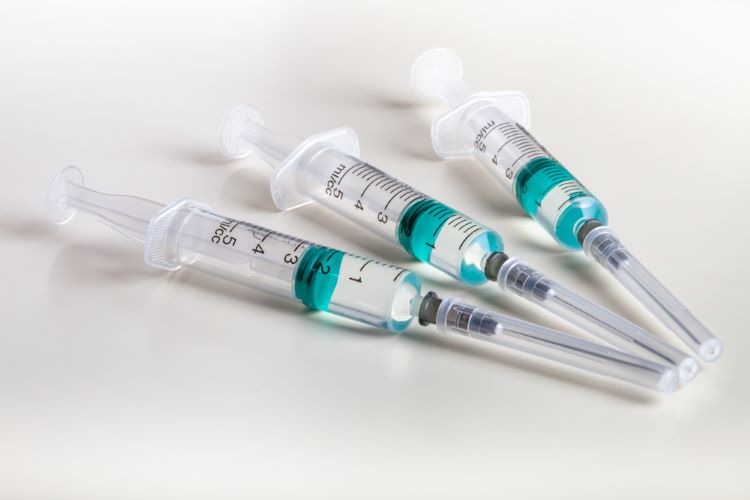
Research has demonstrated a cost-effective storage solution for compounded faricimab kept for a maximum of 28 days. Authors of the paper stated that it provides off-label use of the anti- vascular endothelial growth factor (VEGF)/angiopoietin-2 (Ang-2) biologic, “while maintaining safety in the treatment of patients”. Their study compared the stability, sterility, and binding affinity to VEGF and Ang-2 of faricimab. Roche’s IgG1 antibody is the first anti-VEGF agent with a bispecific mode of action, the authors explained.
Compounding and storage challenges
Compounding and storage of intravitreal anti-vascular endothelial growth factor (anti-VEGF) agents in syringes is a common practise done off-label, according to the authors, Taschauer et al.
However, since faricimab has different antibody properties, they wrote that there are safety issues concerning this process of the treatment compared to other anti-VEGF agents.
Due to rising demand of anti-VEGF drugs resulting from demographic changes, the authors asserted that data about the long-term stability of faricimab in ready-to-use syringes is of clinical relevance for those providing anti-VEGF therapy.
Method and key findings of the faricimab study
The researchers compounded the antibody medicine into silicone oil-free and silicone oil-containing polypropylene syringes for up to 28 days. Storage was done under light protection at 2°C to 8°C.
A “significant concern” with compounded antibodies the authors noted, is the potential of aggregates being formed, as well as structural degradation.
Positively, this study found “neither signs of oligomerisation, nor changes in the size distribution, nor the formation of undissolved particles or aggregates”. This was the result of 28 days of storage by SEC, UV-VIS and DLS.
There were no significant differences in VEGF and ANG-2 binding affinity in the samples when compared to the control sample, the paper reported.
the method offers a way to increase the cost-effectiveness intravitreal injections in real-world settings”
Additionally, no statistically significant variations in chemical or physical stability were observed. The paper highlighted that sterility could be maintained. For example, endotoxin concentration below the detection limit of 2.5EU/mL was seen.
Taschauer et al. concluded that the method offers a way to increase the cost-effectiveness intravitreal injections in real-world settings.
This study on the anti-VEGF antibody drug is reported in a preprint paper under review at the journal Eye, available on Research Square. It has not been peer reviewed.
Related topics
Antibiotics, Biologics, Biopharmaceuticals, Clinical Development, Clinical Trials, Data Analysis, Drug Delivery Systems, Drug Safety, Formulation, Microbiology, Packaging, polymers, Proteins, QA/QC, Research & Development (R&D), Therapeutics