

Addressing the importance of appropriate analytical method selection, Sigma Mostafa at KBI explores ways to optimise the chances of success in the clinic.

As drug development programmes become increasingly complex, identifying potential risks early is essential to avoiding costly delays and failures in later stages. From selecting developable molecules to characterising emerging modalities such as antibody–drug conjugates (ADCs), analytical expertise plays a key role in informing development decisions. In this interview, Sigma Mostafa, Chief Scientific and Technology Officer at KBI Biopharma, discusses the role of predictive analytics, advances in AI and machine learning, and the importance of selecting the right analytical methods early in development.
Why is deeper analytical expertise becoming increasingly important in drug development, particularly for identifying risk earlier?
If we look at the development continuum – starting with early preclinical animal studies, followed by IND-enabling studies and then Phase I clinical trials, where the focus is on safety, before moving on to efficacy in later phases – the costs increase significantly as you progress through development.
Investors are increasingly asking for clinical data rather than just [taking on] a preclinical asset.”
From an investment perspective, we have also seen significant changes post-COVID in the levels of investment in new assets. Investors are increasingly asking for clinical data rather than just [taking on] a preclinical asset. If you do not understand the potential challenges with your molecule early on and progress all the way to clinical trials – because that is what the market demands for you to secure investment – the costs of failing at that stage are staggering. By conducting thorough due diligence on your molecule and its likelihood of success in the clinic, you can reduce those costs substantially.
The other key reason that deeper analytical expertise is becoming important is that biologics are evolving towards more complex structures that require a wider set of analytical tools.
What does predictive analytics look like in practice, and how can it change decision making during development?
In the early phases of development there are multiple candidate molecules to consider, rather than a single product to take forward. The focus is often on pharmacokinetic (PK) and pharmacodynamic (PD) studies to assess the impact of the body on the drug and the impact of the drug on the body, respectively. While it is important to choose the candidate with the best PK and PD profile, it is also important that the chosen candidate is manufacturable.
While it is important to choose the candidate with the best PK and PD profile, it is also important that the chosen candidate is manufacturable.”
If a molecule is not manufacturable, you could end up selecting a candidate that is very difficult to produce or scale up in a mammalian or microbial cell line. You may also face challenges in purifying the candidate due to aggregation, fragmentation, a high level of hydrophobicity, chemical modifications and strong binding to host cell proteins. The analytical toolbox KBI implements at this stage includes testing for post-translational modifications (PTMs), chemical stability, aggregation, thermal stability, hydrophobicity, solubility, colloidal stability, viscosity, formulation screening and potency.
At KBI, we have a large database of more than 500 molecules that we have worked on, including a wide range of complex proteins. We are able to draw on that knowledge to identify potential problems early. We also use proprietary and open-source in silico models in manufacturability assessment.
As programmes become more complex, including ADCs and other emerging modalities, what new analytical challenges are developers having to address?
Many of our clients are seeing their portfolios shift towards ADCs and other emerging modalities – such as antibody-oligonucleotide conjugates (AOCs), bispecific ADCs, peptide conjugates and antibody–radionuclide conjugates (ARCs). Whenever you have a conjugate product, your analytical characterisation work doubles, since you are studying the protein/peptide, the full conjugate, the free payload and the linker.
Whenever you have a conjugate product, your analytical characterisation work doubles.”
The inherent structural heterogeneity of conjugation products often requires disassembly of the molecule into manageable subunits for independent characterisation. Depending on the type of conjugation, the drug-to-antibody ratio (DAR) variability can also be a challenging method to develop. The various components of the conjugated drugs have different charge and hydrophobicity profiles, leading to stability, solubility and formulation challenges. Custom method and formulation development therefore becomes necessary from the early phase of the programme.
KBI’s Louisville, Colorado site is the Centre of Excellence for product characterisation and elucidation of structure for Biologics License Application (BLA) submission. In the case of ADCs, elucidation of structure refers to the comprehensive chemical, physical and biological characterisation required to prove the exact molecular identity, consistency and structural integrity of the conjugate. Comprehensive product variant characterisation via isolating and enriching the variant species and then subjecting them to biophysical and potency evaluation is a key requirement for such complex products to be approved. Our Louisville site delivered the elucidation of structure for one of the first ADCs that came to market. KBI has since supported characterisation of many other conjugation products.
How are AI, machine learning and digital tools changing the way analytical data is generated, interpreted and shared during development?
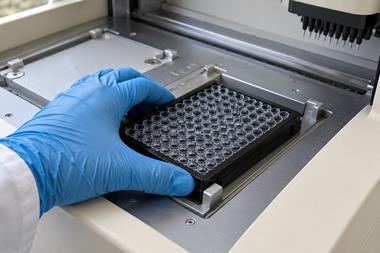
Analytical development has achieved considerable efficiency gains through automation and digitalisation over the last decade. At KBI, for example, we went from manual enzyme-linked immunosorbent assay (ELISA) execution to hands-free automated ELISA execution using TECAN platforms. One scientist could do two ELISA plates per day, and each TECAN can do up to eight plates per day. Given that we use two TECANs, our output has increased 8-fold and does not require any resources other than setting up the script at the beginning of the day. Improved precision due to eliminating operator variability is an added benefit. We also use the Andrews Plus liquid handler for all pipetting needs. The TECAN and Andrews Plus have given our employees respite from ergonomic stress from repeated motions.
In addition to using electronic notebooks and laboratory information management systems (LIMS), we have invested in developing a smart client portal that brings together equipment data, experimental setup and method information, other metadata, report generation and client discussions under one umbrella. The near real-time data visualisation, in conjunction with rapid resolution of challenges, is appreciated by all parties.
Machine learning can transform analytical method development for biological drugs through data-driven predictions and automated workflows.”
Machine learning (ML) can transform analytical method development for biological drugs through data-driven predictions and automated workflows. The use of ML for chromatographic method optimisation and automated peak deconvolution is an area being explored by innovator companies and contract development and manufacturing organisations (CDMOs). At KBI, we are using in silico models for predicting process, analytical and formulation development options for complex molecules with competing hydrophobicity and charge profiles at different segments of the molecule and also addressing challenges with high-concentration products. Another unique application of ML at KBI is for particle characterisation. Particles present a difficult challenge partly because their characterisation can be tricky. We have developed a proprietary ML method for identifying the particle type. This enables quick and robust troubleshooting when particles unexpectedly appear in process intermediates, drug substance or drug product.
As sponsors face increasing pressure on development costs and timelines, how can analytical expertise and technology help them make better development decisions?
A broad range of analytical techniques is needed to characterise complex molecules effectively, from mass spectrometry and biophysical characterisation to cell-based assays. Applying the appropriate methods early in development helps build a more complete understanding of a molecule’s properties, including its structure, stability and potency. Integrating this analytical work from the outset can help identify potential issues sooner, support better-informed development decisions and reduce the risk of costly delays later on. An example would be to use surface plasmon resonance (SPR) or a cell-based assay for potency assessment in Phase I clinical development, rather than a traditional binding assay. SPR provides real-time, label-free kinetic measurement compared to only end-point measurement from a tractional binding assay. Cell-based assays measure the functional biological response. Another example would be to use in silico modelling in conjunction with high-throughput screening of formulations, as opposed to staying with a formulation that has worked on a previous molecule. The more customised and complex the method is, the costlier and more time consuming it is to develop; however, these timely investments increase the likelihood of success severalfold at clinic.
About the interviewee

Sigma Mostafa is a highly experienced biopharmaceutical executive with a track record of driving growth and market expansion, building high-performance organisations and transforming organisational culture. She has extensive technical and management expertise in cell line and process development, tech transfer, validation and clinical and commercial manufacturing. She has a strong focus on operational excellence, quality culture and talent development.
As KBI’s Chief Scientific Officer, she leverages her deep technical expertise in analytics, cell line development and process development to drive global innovation at KBI. She oversees analytical services, process development and cell line development.
Sigma earned her PhD in Chemical & Biological Engineering from Northwestern University and her Bachelor’s in Chemical Engineering from the University of Texas at Austin with High Honors.







No comments yet