

Study findings could improve fluorescence-based bacterial quantification.
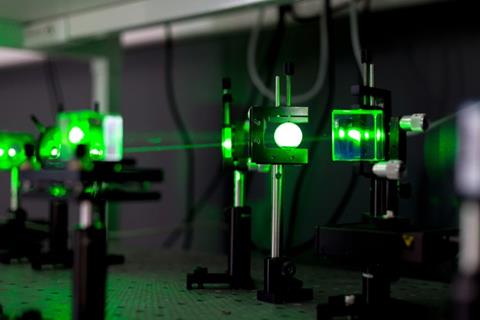
An enhanced fluorescence-based bacterial detection method has shown promise as a highly sensitive alternative to conventional laser-induced fluorescence (LIF) approaches.
Researchers at Cairo University developed three enhanced approaches: reflection-enhanced LIF (RELIF), wavefront-enhanced LIF (WELIF), and a combined approach (WERELIF).
LIF enables fluorescence to be “collected at multiple angles relative to the collimated laser beam, enabling high-resolution 2D and 3D imaging”.
Traditional bacterial detection methods are time-consuming and expensive, so the industry has significant need for improved alternatives, prompting the study.
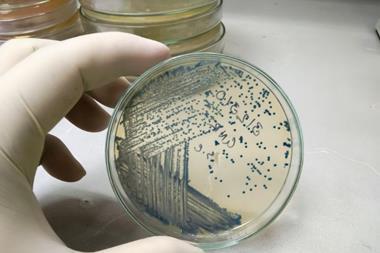
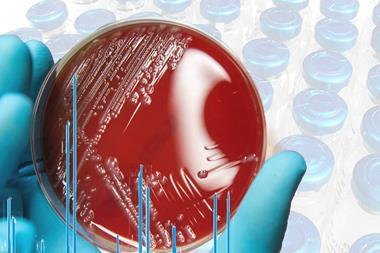
The team chose Pseudomonas aeruginosa (P. aeruginosa) as a model organism, due to its fluorescence properties and common association with infections and the formation of biofilms. They assessed the bacteria without isolating or labelling its individual chromophores. Arabi et al. excited fluorescence to 405nm, reporting a peak at approximately 500nm.
WERELIF was found to be the most effective detection method at low bacterial concentrations, as it “demonstrated the highest fluorescence intensity and the lowest limit of detection (LOD)”, the authors explained.
The method’s design involved a flattop beam that redistributed energy evenly across a wider area, “ensuring uniform illumination of fluorophores”, which enhanced signal consistency and improved the reliability of integrated fluorescence intensity measurements, Arabi et al. explained.
[WERELIF] merges wavefront and reflection enhancement to achieve unparalleled performance, enabling... the highest sensitivity for detecting traces of bacteria, even in highly diluted samples”
Critically, the technique “merges wavefront and reflection enhancement to achieve unparalleled performance”, enabling “superior fluorescence retention with minimal signal attenuation, the highest sensitivity for detecting traces of bacteria, even in highly diluted samples, and enhanced spectral consistency by mitigating distortions inherent to WELIF”.
The enhanced methods “improve sensitivity, lower the limit of detection (LOD), and strengthen quantification accuracy” for bacterial detection.
The authors proposed that future investigation could “further integrate machine learning-driven calibration” to enhance sensitivity and accuracy.
The paper was published in AMB Express.