



The new gas chromatography test strengthens quality control within the pharmaceutical supply chain as well as availability of safe, high-quality medicines, particularly for children.
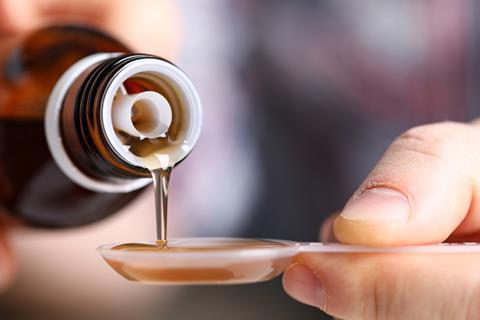
Four revised monographs adopted by the European Pharmacopoeia (Ph. Eur.) Commission are set to aid detection of adulterated excipients sorbitol and maltitol in medicines contaminated with the toxic substances ethylene glycol (EG) and diethylene glycol (DEG).
Sorbitol and maltitol are common ingredients in paediatric syrups and other syrup formulations.
The following revised monographs will come into force on 1 July 2027:
- Sorbitol, liquid, partially dehydrated (2048)
- Sorbitol, liquid (non-crystallising) (0437)
- Sorbitol, liquid (crystallising) (0436)
- Maltitol, liquid (1236)
The revision is a response to work by the Carbohydrates Working Party, mandated in March 2024 by the Ph. Eur., to establish a method capable of detecting and quantifying EG and DEG in the excipients sorbitol and maltitol.
Specifically, the new gas chromatography test can quantify ethylene glycol and diethylene glycol, enabling operators to confirm adulteration if the maximal allowed limits are exceeded (620 ppm and 0.10 percent, respectively). Moreover, detection limits of 50 ppm for both EG and DEG, facilitate detection of minute quantities as impurities, following manufacturing. Testing frequency using this new method is determined through a risk assessment.
The method can be found in each of the four monographs. It represents the first time the Eur. Ph. has included the section sub-heading ‘Potential adulteration’ for this format. The organisation noted that this section may be included in monographs covering substances ‘for which an incident has occurred or which are at risk of deliberate contamination.’
In related news, last month the European Pharmacopoeia issued the revised monograph Macrogols (1444) for public feedback, demonstrating the organisation’s continued efforts to mitigate contamination of ethylene glycol (EG) and diethylene glycol (DEG) in pharmaceutical medicines.







No comments yet