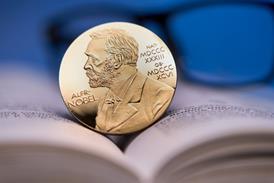

The proposed mechanical antibacterial approach offers a new way to use metal-organic frameworks, a Nobel Prize-winning material.
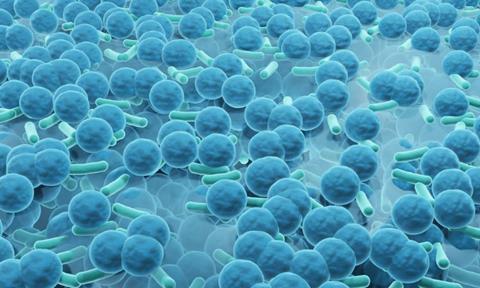
An innovative, mechanical technique has shown promise for eliminating biofilms without requiring antibiotics or toxic metals, according to researchers in Sweden.
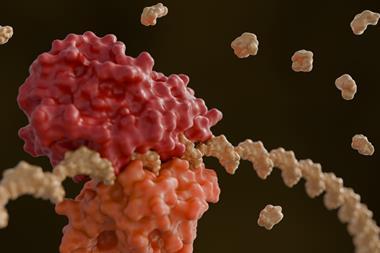
In their study, the team from Chalmers University of Technology coated surfaces with metal-organic frameworks, a nanomaterial that won the 2025 Nobel Prize in Chemistry.
Our study shows that these nanostructures can act like tiny spikes that physically injure the bacteria, quite simply puncturing them so that they die. It’s a completely new way of using such metal-organic frameworks"
Lead author Zhejian Cao, PhD, said: “Our study shows that these nanostructures can act like tiny spikes that physically injure the bacteria, quite simply puncturing them so that they die. It’s a completely new way of using such metal-organic frameworks.”
The method works by growing one of these frameworks on top of another. Controlling their growth enabled the nanotips to form. although Cao et al. noted that a major challenge was “finding the right distance between the nanotips to maximize their effect”.
In their study, two ways of surface assembly for the metal-organic frameworks were applied: in situ growth and ex situ dropcasting. The team reported surfaces that delivered mechano-bactericidal actions, for example, “bactericidal efficiency of 83 percent for E. coli”.
Notably, the innovative approach also “eliminates the risk that controlling bacteria will lead to antibiotic resistance.”
Scale-up potential
Other key benefits of the method by Cao et al. include a “wide range of feasible substrates, the waiver of sophisticated equipment, and the scalability of our MOF-on-MOF [mechano-bactericidal] surfaces.”
Additionally, co-author Professor Lars Öhrström explained that because the novel technique uses a low fabrication temperature, it could facilitate large-scale production and enable the coatings to be applied to temperature-sensitive materials.
It also holds sustainability merit, since the organic polymers in the metal-organic frameworks can be created from recycled plastics, Öhrström added.
Funders of the research include NordForsk, the Novo Nordisk Foundation.
The paper was published in Advanced Science.