
Synthesis of the naturally-derived capsules provide a sustainable alternative to traditional, microplastic-contributing drug delivery options.
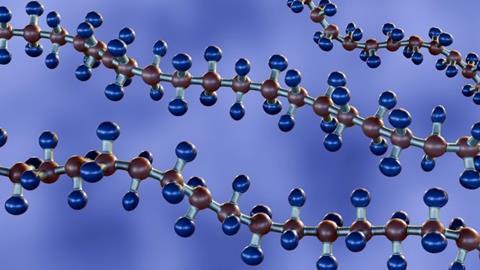
Novel, naturally-derived polymer capsules developed by a team of Japanese researchers could help to advance more sustainable drug delivery options.
At present, the conventional polymer capsules used for encapsulating molecules, including drugs and oligonucleotides, have non-degradable properties that raise sustainability and health concerns.

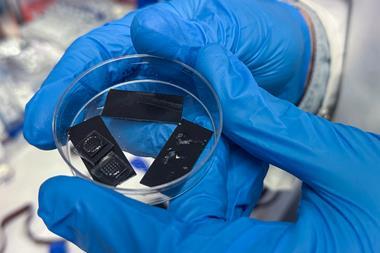
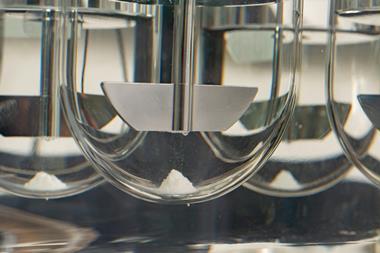
(Credit: Osaka Metropolitan University)
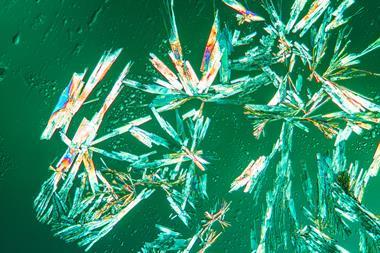
After being irradiated with light, natural-derived monomers become polymer capsules.
Promisingly, the polymer capsules proposed by Kitayama et al. and made from photoreactive monomers are based on naturally-occurring molecules, such as the cinnamic acid found in certain plants and glycerol, which is found in lipids.
The capsules are shelf-stable for one year and can degrade in two different ways: photodegradation via photolysis, as well as hydrolysis. Moreover, the process can begin in water and does not require initiators or catalysts for degradation to begin.
Kitayama et al. reported that the polymer capsules “showed negligible leakage of encapsulated sulforhodamine B, even after several months of storage, and were efficiently degraded upon exposure to short-wavelength LED light or hydrolysis under alkaline conditions”.
This polymer capsule can stably encapsulate low-molecular-weight fluorescent dyes and fragrances”
Lead author, Professor Yukiya Kitayama of Osaka Metropolitan University, Japan, said: “This polymer capsule can stably encapsulate low-molecular-weight fluorescent dyes and fragrances. Furthermore, by expanding the synthesis scale to 100 times that of conventional methods while maintaining process safety, we have demonstrated its potential for industrialisation.”
Looking ahead, scaled-up synthesis of the polymer capsules can be achieved by applying high-power light-emitting diode light. Kitayama et al. anticipates this will expedite design of an innovative synthesis method for resource-recycling polymer capsules.
The research was published in Chemical Science.
Meanwhile, other recent sustainability developments in pharma include the European Commission’s decision to remove the rabbit pyrogen test (general chapter 2.6.8. Pyrogens) from its texts. That move will help to safeguard limited natural resources like the horseshoe crab required for quality control testing by manufacturers.
Additionally, last November Merck signed a deal to add renewable electricity to the grid for its South Korea operations.