

A new, more efficient colony counting method called the Geometric Viability Assay (GVA) could enable microbiologists to test potential new drugs such as antibiotics more quickly.

US researchers have developed the Geometric Viability Assay (GVA), which has been shown to be a fast, cheap and sustainable method for counting microorganisms.
Since it is 36 times faster than conventional methods, uses 15 times less plastic, and is low cost, Geometric Viability Assay could “replace existing viability assays and enable viability measurements at previously impractical scales”, the paper noted.
Critically, with scientists globally working to reduce the risk of antimicrobial resistance (AMR), the method, described in a paper published in Nature Microbiology, could enable researchers to test potential new drugs in much less time.
The researchers, from the University of Colorado Boulder highlighted that since 1938, the colony forming unit (CFU) assay has been the “gold standard” for counting bacterial cells in a sample. However, they emphasised that the process “is time-intensive and resource-consuming”, particularly as it generates a “substantial amount of plastic waste”.
Therefore, up until now, microbiologists have had to be selective about which new drugs are tested and thus in developing new antibiotics. “In order to have a sustainable pipeline of new options, we have to fundamentally change the way discovery is done,” senior author Anushree Chatterjee, Associate Professor of chemical and biological engineering at CU Boulder stated.
Positively, the Geometric Viability Assay enables over a “10-fold [reduction in] the time and consumables required”.
Geometric Viability Assay: a one-step process
To facilitate colony counting to be made easier, traditional methods require samples to be manually divided into numerous subsample.
[Geometric Viability Assay enables] throughput of up to 1,200 viability measurements per researcher per day"
Comparatively, according to the paper, “Geometric Viability Assay calculates the CFUs in a sample on the basis of the axial position of embedded colonies that form in a cone… [and enables] throughput of up to 1,200 viability measurements per researcher per day”.
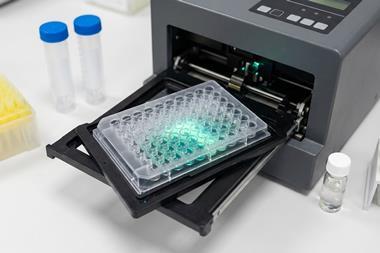
When measuring common bacteria like Escherichia coli (E. coli) and Salmonella enterica in the lab, researchers found that preparing 96 samples took just five minutes, instead of the three hours required with traditional methods. Additionally, compared to more modern methods using robotics, Geometric Viability Assay was still nine times faster, the researchers found.
While a patent for the method has been filed, the research team added that they are developing a smartphone version to support widespread use of Geometric Viability Assay.
https://www.europeanpharmaceuticalreview.com/news/187642/study-reports-rapid-method-for-microbial-contaminant-detection/