
US administration proffers leeway on tariffs for some drugs, with UK exports benefitting from exemption under the recent UK-US partnership.
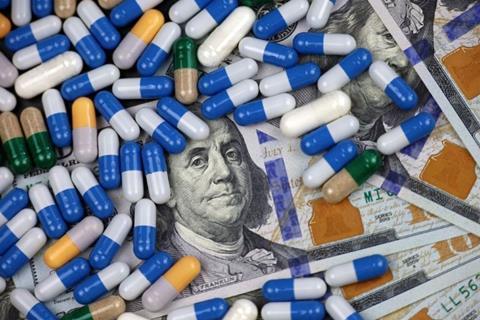
President Trump has imposed a 100 percent tariff on patented pharmaceutical products and ingredients, under Section 232 of the Trade Expansion Act of 1962.
Originally declared in September 2025, the policy confirms what the administration has proposed it will enforce for more than twelve months.
The move has since spurred major domestic investments by many large firms in the industry, including Johnson & Johnson, who ramped up their onshoring efforts earlier this year with plans to invest $1bn in US cell therapy manufacturing. Addition of a new facility in Pennsylvania is just a portion of the $55 billion J&J has allocated to expand its US manufacturing footprint by 2029.
Biotechnology firm CSL has also chosen to expand its manufacturing capabilities by adding capacity at its Kankakee, Illinois site with a $1.5 billion commitment. The facility produces plasma-derived therapies and albumin.
US manufacturer Bright Path has welcomed President Trump’s rollout. Its CEO Tony Quiñones declared the duties “sends the clearest signal yet that America is serious about manufacturing its own medicines”.
[President Trump’s 100 percent tariff rollout] sends the clearest signal yet that America is serious about manufacturing its own medicines”
As detailed in the proclamation, companies can access 20 percent rate through an ‘onshoring’ arrangement. While existing trade deals mean that products originating from the EU, Japan, Korea, Switzerland and Liechtenstein will be subject to a tariff rate of 15 percent.
Yet UK-made pharmaceuticals are exempt under the new tariff structure. The exclusion is granted following on government’s recent signing of the full text of the landmark US-UK pharmaceutical partnership, originally announced in December. This deal makes the UK the first country to secure a zero percent rate on US tariffs for pharmaceutical exports. Under the three-year agreement, thousands of NHS patients will get improved access to novel treatments.
John Murphy III, President and CEO of the Association for Accessible Medicines (AAM), reflected that having the proclamation not include generics, biosimilars, and associated ingredients in the tariff rate “will help enhance the generic medicines supply chain”. The US administration’s stance on this will be reviewed in a year’s time.
However, the Pharmaceutical Research and Manufacturers of America (PhRMA)’s President and CEO Stephen Ubl cautioned that signing of Section 232 tariffs will put the US’s goal of being a leading location for manufacturing affordable and cutting-edge medicines at risk. Primarily because it “will increase costs and could jeopardise billions in US investments announced in the last year”.
The Biotechnology Innovation Organization (BIO) shared this sentiment. According to its President and CEO, John Crowley, the imposed tariffs, “along with an uncertain policy environment and efforts to force ‘most‑favoured nation’ schemes’”, hinder this ambition, “especially for small and mid‑size biotech companies [who] often lack the capital to build dedicated manufacturing facilities as they weather an industry defined by high costs, long development timelines, and significant risk”.
The new US duties, which incentivises domestic pharmaceutical production, will commence in 120 days for large firms and 180 days for smaller companies, officially launching 31 July.


No comments yet