

Novel method could optimise beta-blocker synthesis
Posted: 20 June 2025 | Catherine Eckford (European Pharmaceutical Review) | No comments yet
The proposed synthesis system offers potential for scalable production of β-blockers, new research suggests.
Chinese researchers have developed a new method that significantly improves the efficiency and sustainability of beta-blocker (β-blocker) production.
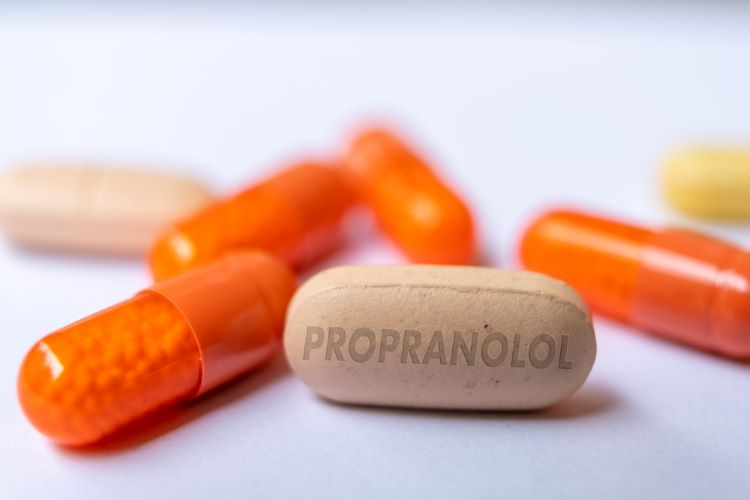
Notably, the team achieved rapid, continuous-flow synthesis of propranolol. According to their findings, the innovative amine-functionalised graphene oxide (NGO) membrane reactor enabled nearly 100 percent conversion and selectivity in under 4.63 seconds at 23 °C.
There are limitations of current approaches for synthesising propranolol, a key compound for management of cardiovascular conditions, Fu et al. explained. For example, existing catalytic systems often have long reaction times and low conversion rates.
the innovative amine-functionalised graphene oxide (NGO) membrane reactor enabled nearly 100 percent conversion and selectivity in under 4.63 seconds at 23°C”
To address these issues, the researchers incorporated vacuum-assisted filtration as part of the membrane reactor infrastructure. Graphene oxide (GO) and NGO membranes served as nanoreactors to achieve the ring-opening reaction. Compared to the GO membrane, the NGO membrane exhibited a catalytic flux 4.36 times higher and achieved a turnover frequency (TOF) approximately 8.07 times greater than that of the GO membrane, Fu et al. stated.
When compared to previously reported catalytic systems, their NGO membrane reactor demonstrated improved reaction time and conversion efficiency, as well as operation under ambient temperature. Notably, they reported TOF of 17.48 h⁻¹ far exceeded that of the NGO powder catalyst, which only achieved 2.27 h⁻¹ under identical conditions.
Optimising beta-blocker synthesis for scalable production
To optimise the method, decreasing interlayer spacing resulted in significantly improved conversion and selectivity for propranolol synthesis, Fu et al. found.
Furthermore, the researchers optimised the reactant molar ratio by increasing the isopropylamine equivalence to prevent formation of undesired by-products from secondary reactions between residual naphthyl glycidyl ether and propranolol. Experiments showed a reaction conversion of nearly 100 percent. Reaction selectivity also improved, with selectivity under a reactant molar ratio of 1:3.
Finally, Fu et al. shared that their NGO membrane reactor also successfully synthesised other beta-blockers, including metoprolol, bisoprolol, pindolol, and naftopidil.
The paper was published in Matter.
Related topics
Data Analysis, Drug Manufacturing, Industry Insight, Manufacturing, Production, Research & Development (R&D), Therapeutics