Changes proposed in the EU body’s regulatory framework aim to create a competitive and sustainable European bioeconomy.
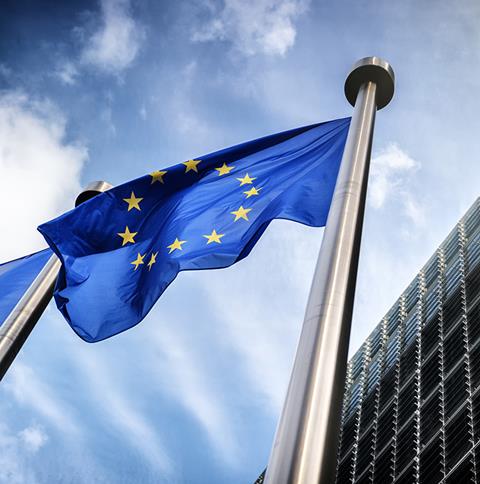
The European Commission (EC) has updated its Bioeconomy Strategy, proposing a simplified framework that prioritises a competitive and resilient European economy.
For the EU to lead the bio-tech revolution, innovation and investment must be scaled beyond the lab, the Commission asserted.
The revised framework builds on its 2012 strategy, with reviews conducted in 2018 and 2022. The changes include the European Parliament’s proposal from July on biotech and biomanufacturing in the EU.
Integrating the EU’s revised bioeconomy strategy
The Commission seeks to enhance the region’s competitiveness and resilience through the strategy; for instance, improving the EU’s resource security by securing partnerships that reduce vulnerability.
The framework aims to reward circular and sustainable business models, while safeguarding EU safety standards. A key focus is sustainable biomass supply via responsible sourcing and enhancing the value of secondary biomass like by-products and organic waste.
the vision is clear: a future where Europe runs on nature, innovation and circular solutions rooted in a competitive and sustainable bioeconomy”
Faster, clearer and simpler approvals for innovative solutions are also planned. The Commission intends to heighten demand for bio-based content in products, such as setting targets in relevant EU legislation. Existing and future EU funding will be directed into bio-based technologies.
A bioeconomy offers an 18 percent annual growth rate for the global biotechnology sector, worth over €720 billion, according to the Commission.
In line with this, the Commission proposes introducing a Bio-based Europe Alliance, where EU companies collectively purchase bio-based solutions worth €10 billion by 2030.
Jessika Roswall, Commissioner for Environment, Water Resilience and a Competitive Circular Economy, European Commission explained that under a strategy aiming to increase the EU’s resilience and competitiveness, the vision is clear: “a future where Europe runs on nature, innovation and circular solutions rooted in a competitive and sustainable bioeconomy”.