
Reflections from a recent panel discussion helped to clarify the most valuable application of artificial intelligence to streamline formulation development.
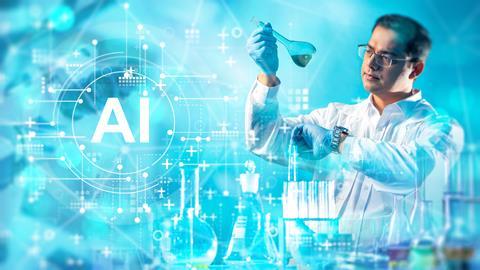
Optimising a pharmaceutical formulation can require extensive experimentation – from selecting excipients to determining the right processing conditions. Artificial intelligence (AI) is starting to offer a way to narrow this experimental space, helping scientists predict what is most likely to work and identify potential risks earlier in the process.
This was a key theme of the panel ‘How AI is Compressing Drug Development and Manufacturing Timelines’ at CPHI Milan, featuring Karthik Raman, CEO of Persist AI; Alan Irvine, Founder of A-I Bioprocessing Limited; and Mohamed Elbadawi, CEO and Co-founder of DeepCeutix. Moderated by Vincent Galand of Galand Advisory, the discussion explored how AI is being applied across formulation development, alongside the practical and data-related challenges that could affect its wider adoption.
Reducing formulation trial and error
One of the main opportunities for AI is reducing the amount of trial and error involved in formulation development.
Predictive models can use existing experimental data to identify promising combinations of excipients and processing conditions, helping scientists narrow the number of approaches to be tested.
Raman described this as an opportunity to predict both the formulation and the process, including factors such as excipient selection, spray drying and tablet coating.
This does not mean removing experimental work from formulation development, but rather using AI to help determine which experiments are most worth pursuing, potentially reducing the time spent investigating approaches that are unlikely to succeed.
Compressing development timelines
AI could also accelerate some of the work that takes place before formulation experiments begin.
Elbadawi highlighted literature searches as one example, with AI being used to identify relevant information on excipients and formulation processes far quicker than conventional approaches. He also described how AI can support formulation optimisation, helping to assess different formulation options more efficiently than traditional design-of-experiments approaches.
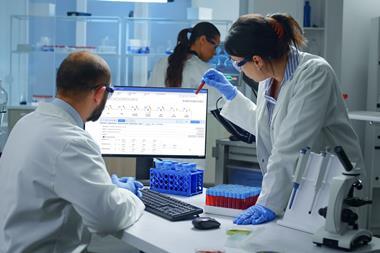
The panel also discussed connecting automated laboratory equipment directly with AI models, allowing experimental data to feed into formulation models as it is generated. This could enable results to be trended during an experiment and potentially reduce the time needed to reach a conclusion.
The value is therefore not simply completing individual tasks more quickly. AI could help reduce the time spent on both the research and analysis surrounding formulation experiments, retaining the experimental work needed to validate the results.
Identifying risks earlier
Another area discussed by the panel was using AI to identify potential risks earlier, before they become more difficult or expensive to address.
Nitrosamines, for example, can be assessed across each stage of the manufacturing process to identify which steps may carry a higher risk. This could allow changes to be considered earlier rather than discovering a potential issue further into development.
Packaging was also discussed as an area where different datasets could potentially be combined to predict how packaging-related factors might affect active pharmaceutical ingredient (API) stability and the risk of extractables and leachables.
While these applications do not remove the need for laboratory testing or validation, they could help scientists understand where the greatest risks are and focus experimental work accordingly.
Data and validation still matter
The panel emphasised that AI is only as useful as the data available to train and inform it. Inconsistent or limited datasets can affect the reliability of predictions, making data quality and appropriate experimental validation vital as AI is incorporated into formulation workflows.
The same principle applies to regulatory use. AI-generated predictions could provide useful supporting evidence, but the panel noted that experimental evidence will still be required to demonstrate that a formulation or process performs as expected.
Supporting scientists – not replacing them
The panel also emphasised that AI should support scientific decision making, rather than replace it.
AI can help analyse formulation data and identify potential solutions, but scientists are still needed to assess whether those outputs make sense and determine how they should be tested. The discussion also highlighted the need for scientists to translate physical laboratory processes, such as the visual assessment of subvisible particles, into data that can be measured and used in automated workflows.
At the same time, scientists may increasingly use AI to handle tasks such as literature searches, data analysis and optimisation, allowing them to focus more on interpreting results and making development decisions. The panel pointed to a growing need for scientists to combine formulation expertise with skills in automation, data and AI.
Making formulation development more predictive
AI is unlikely to eliminate the physical experimentation required to develop and manufacture pharmaceutical formulations. But by using existing data to predict promising formulations and processes, identify risks earlier and reduce time spent on repetitive analysis, AI could help formulation teams move more quickly through development while making better use of experimental resources.
The result would not be formulation development without experimentation, but a process in which scientists have a clearer idea of what to test, why to test it and where the greatest risks are.
CPHI panel: How AI is Compressing Drug Development and Manufacturing Timelines.












No comments yet