


Drawing on more than 20 years in the industry and a few unexpected lessons, CPHI Awards 2026 – Woman of the Year finalist, FUJIFILM Biotechnologies’ President and Chief Operating Officer Maja Pedersen, reflects on how leading as your authentic self produces better outcomes for teams, organisations and patients.

The most effective leaders in biopharma are rarely those that follow the most conventional path. Personally, a background with horses completely reshaped my approach to leadership. Early in my riding journey, I believed the best way to guide a horse was through force and control. Instead, the harder I pushed, the more resistance I encountered. It wasn’t until I stepped back and examined the friction that I realised effective leadership isn’t about imposing your will; it’s about building trust, adapting your approach and creating the conditions for others to experiment and find a way to perform at their best.
That lesson has stayed with me for more than two decades, and I now apply it to my career. While our industry has transformed significantly, many organisations still rely on leadership models built for a different era: ones that reward people who fit a traditional mould rather than challenge it. In an industry defined by innovation, we’ve been slower to rethink what effective leadership can also look like.
In an industry defined by innovation, we’ve been slower to rethink what effective leadership can also look like”
That instinct towards uniformity is understandable. Consistency feels safe in a regulated industry where the margin for error is narrow and the consequences of getting things wrong extend to patients. The problem is that when we apply that same instinct to leadership, we risk unintentionally discouraging the independent thinking that our industry depends on. Leaders who feel pressure to adopt someone else’s style are less likely to question assumptions, surface new ideas or approach challenges from a different angle.
The most effective leaders that I’ve worked alongside haven’t succeeded because they all led the same way. They’ve succeeded because they understood their own strengths, stayed grounded in their values and created environments where others could do the same.
Why leaders must resist the pull towards conformity
Leaders in this industry make decisions that have a direct line to patient outcomes. Every quality system, regulatory decision and team interaction can accelerate access to life-changing medicines or slow it down. The strongest leaders don’t rely on a single inherited playbook; they draw on their own experiences and ways of thinking to question assumptions, spot operational blind spots and solve problems from angles others might overlook. That diversity of thought leads to stronger decisions, more resilient organisations and ultimately, a faster path to patients.
My career reflects what that looks like in practice. Moving from Chief Quality Officer to Chief Technology Officer to Chief Operating Officer at FUJIFILM Biotechnologies is not a linear trajectory by conventional standards. Yet each role expanded how I viewed the business – from ensuring quality and regulatory rigour to advancing technology and ultimately balancing enterprise-wide operational priorities. What I observed across those roles was consistent: making the most durable impact happens when you hold a clear set of values.
How organisations can create room for authentic leadership
From my experience, high-performing cultures are built on trust and flexibility. Those two attributes are inseparable. Not every person in a team needs the same environment to do their best work. Great leadership means being able to read that and respond to it, rather than standardising how people operate for convenience.
In practice that means giving people genuine ownership. I once encouraged a team at one of our facilities to identify and implement process improvements entirely outside their regular scope of responsibilities. They streamlined workflows and improved throughput by more than four times. That kind of result does not come from command and control, but from people who feel trusted enough to act.
The part that often gets overlooked is that sustaining a culture like this long-term requires leaders to invest in themselves with the same intentionality they bring to their teams. I embrace my own vulnerability and actively draw on mentors and support networks when I feel set back or stuck. We must seek out the people who leave us more energised after a conversation and handle those relationships with care.
Turning authentic leadership into daily practice
Authentic leadership can be fostered by a set of habits that any leader can develop. Three practices have made the biggest difference in my own career.
First, seek out mentors who challenge your thinking. The best mentors broaden your perspective and help you see your blind spots. Surround yourself with people who leave you feeling invigorated and thoughtful after conversations.
Second, spend time where the work actually happens. One leadership principle I return to often is Gemba – the idea of going to the actual place. For me, this means getting out of my office and going onto the shop floor. Talk with people at every level of the organisation. Trust is built through presence, not distance. Some of the most valuable ideas come from the people closest to the work.
give people ownership instead of instructions”
Third, give people ownership instead of instructions. Innovation rarely comes from tightly controlled environments. It comes from giving talented people the confidence to solve problems in their own way. When leaders create space for others to contribute beyond their job descriptions, they unlock ideas and improvements that no top-down directive could produce.
A well-supported leader is better equipped to create an environment where others have the confidence to lead authentically, and that effect compounds over time. As trust grows, so does people’s willingness to challenge assumptions, contribute new ideas and take ownership of meaningful work.
The future of biopharma won’t be defined by scientific innovation alone. It will also be shaped by the leaders who create cultures where different perspectives are welcomed and trust is built. When people are empowered to lead from their own strengths, organisations make better decisions, solve harder problems and ultimately deliver greater impact for the patients they serve.
About the author
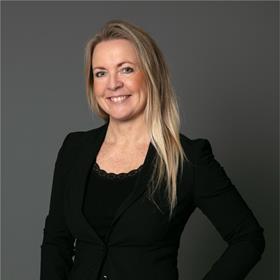
Maja Pedersen is President and Chief Operating Officer of the contract development and manufacturing organisation (CDMO) FUJIFILM Biotechnologies. Recent Woman of the Year finalist at the CPHI Awards 2026, she has over 20 years of experience in the biopharmaceutical and life sciences industries, having held leadership positions in quality assurance and control, regulatory affairs and external manufacturing.









No comments yet