

Digitally-driven technique supports development of autonomous, continuous biomanufacturing technologies.
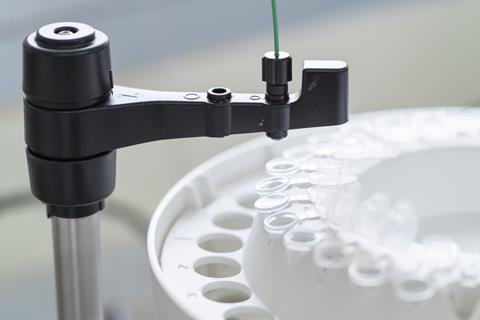
A novel protein purification system could “reframe chromatography as a [digitally] programmable, logic-driven operation rather than a device-level fluid routing task”, research shows.
The study by Liao et al. used both inlet (ICV) and collection (CCV) valve modules for microfluidic continuous protein purification (MCPP).
This platform uniquely combines real-time fluidic control and contamination-free operation in a fully disposable format.
Critically, the approach addresses challenges in scalability, reproducibility, and contamination control. Additionally, it provides automated control, making it suitable for decentralised production.
In controlling contamination, specifically cross-contamination, this is mitigated by the system’s single-use design as it reduces dead volume.
While existing techniques primarily automate flow routing, the ICV–CCV system enables “autonomous coordination of buffer delivery, column cycling, and fraction discrimination”.
the ICV–CCV system enables autonomous coordination of buffer delivery, column cycling, and fraction discrimination”
Using E. coli GFP-His6 lysate as a model substrate, the platform maintained 70–89 percent purity over ten uninterrupted cycles, “demonstrating strong cycle-to-cycle stability”.
Furthermore, collecting only the high-concentration fraction during elution, the CCV “increased product purity to 80–89 percent while minimising dilution from late-stage eluates”.
This strategy “represents a meaningful advancement in dynamic fraction control for protein purification”, the authors wrote.
The team also evaluated the system’s applicability in therapeutic protein production, finding that it “preserved both structural integrity and biological function”.
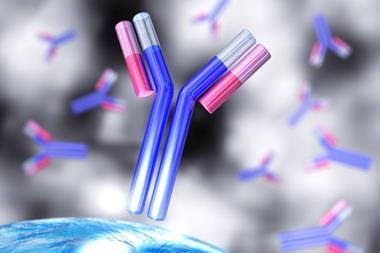
The study focused on immobilised metal affinity chromatography (IMAC). However, the platform’s fluidic design means it is compatible with additional modes such as ion-exchange and hydrophobic interaction chromatography. This would include for example, monoclonal antibody purification.
If integrated with upstream fermentation modules, end-to-end continuous bioprocessing is possible, with the added benefit of a minimal production footprint.
Lastly, if enhanced further with gradient elution, multi-mode chromatography, and AI-driven optimisation, Liao et al. anticipate their approach could “transform” both biomanufacturing and personalised therapeutic protein production.
The paper was published in the journal Lab on a Chip.





No comments yet