



Recommendations support next-generation sequencing-based safety evaluation of off-target editing for personalised gene therapies.
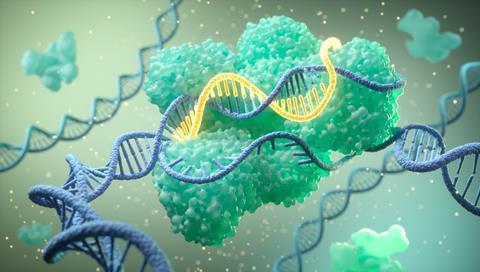
The US Food and Drug Administration (FDA) is seeking comment on new draft guidance on standardised methods for the safety assessment of genome editing therapies.
The recommendations focus on next-generation sequencing (NGS)-based methods to evaluate potential safety risks associated with off-target editing and loss of genome integrity. They address sequencing strategies, sample selection, analysis parameters and reporting of nonclinical studies for both ex vivo and in vivo products.
Vinay Prasad, Center for Biologics Evaluation and Research (CBER) Director, said: “Next-generation sequencing not only detects off-target editing and assesses chromosomal integrity; it also requires science-based recommendations for its use. We’re giving sponsors a roadmap for comprehensive safety assessment while supporting the efficient development of these promising therapies.”
[The FDA’s new draft guidance] provides sponsors with clear, scientifically-grounded recommendations for evaluating off-target editing risks using state-of-the-art sequencing technologies”
FDA Commissioner Marty Makary explained that the new draft guidance “provides sponsors with clear, scientifically-grounded recommendations for evaluating off-target editing risks using state-of-the-art sequencing technologies.”
It aims to advance gene therapy development and shorten the timeline for these treatments to reach patients. It builds on two earlier FDA publications for rare disease therapy approvals.
The agency in 2024 issued guidance on genome edited gene therapy products. Then in February, FDA published its first draft guidance supporting the approval process for ultra-rare disease therapies. These recommendations specifically focus on genome editing and RNA-based therapies such as antisense oligonucleotides.
Comments on the FDA’s new draft guidance can be made here.
Recent developments in the genome editing therapy space include new promising clinical data for a one-time gene-edited treatment in severe sickle cell disease. Editas Medicine’s CRISPR–Cas12a autologous stem cell therapy renizgamglogene autogedtemcel (reni-cel) improved participant’s total haemoglobin levels. Only one patient in the phase I/II trial experienced painful sickle cell crises. This indicates that the treatment could provide a functional cure for this condition.






No comments yet