The manufacturing process for the nanoemulsion could be adapted for industrial-scale production, the researchers suggested.
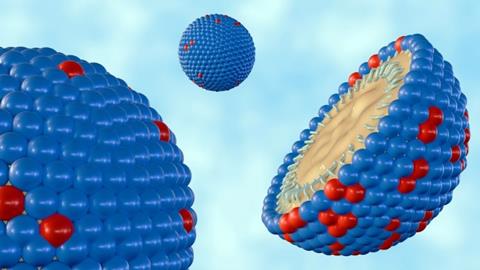
A paper has a described the first reported use of nanoemulsions as a novel delivery vehicle for the oral drug bedaquline (BDQ) “with high loading efficiency as a liquid dosage form”, according to the authors. The researchers explained that in recent decades, the industry has placed significant focus on lipid-based nanocarrier formulations for oral drug delivery. Notably, the “highly lipophilic” properties of BDQ make it “an ideal candidate for formation into a lipid-based drug delivery system”.
The diarylquinoline drug is used to treat multidrug-resistant tuberculosis is at present, only commercially available in tablet form, the paper emphasised.
Additionally, paediatric administration is a challenge using currently available forms of the drug, the authors noted.
Key findings from the nanoemulsion formulation study
In vitro studies showed that the bedaquline (BDQ)-loaded nanoemulsion achieved 97.5 percent drug release within 24 hours"
In vitro studies showed that the bedaquline (BDQ)-loaded nanoemulsion achieved 97.5 percent drug release within 24 hours. The paper highlighted that comparatively, under the same conditions, the pure drug resulted in “no detectable release”.
The self-emulsification method was applied with success to manufacture nanoemulsified BDQ formulated with three solvents. Ajayi et al. explained that the surfactant concentrations did not have a significant effect on the drug content.
Future applications
Considering these findings, the optimised BDQ nanoemulsion “could serve as a promising carrier system for BDQ” and may provide a “more convenient and user-friendly alternative to administering the 100mg BDQ tablet, especially for children who may struggle with tablet ingestion,” the authors suggested.
Manufacturing of the nanoemulsion was considered “straightforward and adaptable for industrial-scale production”.
However, the paper asserted that further studies are required to “maximise the drug content” and to determine the effectiveness of the nanoemulsions against multi-drug resistant tuberculosis. However, the formulations were reported to have great potential for “improving solubility, drug delivery, and administration of BDQ”.
The paper is available as a preprint on Research Square.