
Simultaneous concentration and buffer exchange of mAbs through asymmetric dialysis may advance end-to-end continuous bioprocessing, suggests AstraZeneca study.
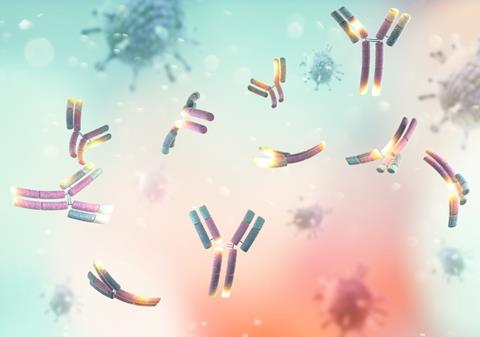
Asymmetric dialysis could offer a simple, low-cost continuous bioprocessing approach according to researchers at AstraZeneca.
By combining ultrafiltration (UF) and diafiltration (DF), the technology enables single-pass continuous unified concentration and buffer exchange. It therefore has potential to replace state-of-the-art UF/DF technologies in bioprocessing.
Writing on LinkedIn, Sanjeev Saxena, bioprocess expert at the manufacturer Sepragen, noted that “asymmetric dialysis has the potential to fundamentally rethink how the industry approaches concentration and buffer exchange, by moving beyond traditional pressure-driven workflows towards more integrated and diffusion-driven processing strategies.
”What’s especially encouraging is seeing this move from concept toward real automated and scalable implementation.”
asymmetric dialysis has the potential to fundamentally rethink how the industry approaches concentration and buffer exchange [and supports the move]… from concept toward real automated and scalable implementation”
The study showed that asymmetric dialysis can perform simultaneous concentration and buffer exchange of monoclonal antibodies (mAbs) in a continuous operation in a simple, sustainable, and low-cost manner. Furthermore, the single-pass operation could enable “improvements in product quality, especially for shear-sensitive products”, the authors explained.
To date, single-pass tangential flow filtration (SPTFF)-based UF and DF operations have been separate processes. Moreover, legacy UF/DF, a two-step batch process, is challenging to integrate into end-to-end continuous biomanufacturing.
The study utilised commercially available hollow fibre membrane cartridges—hemodialyzers—to perform simultaneous one-step continuous UF, buffer exchange, and formulation of biotherapeutics.
Notably, asymmetric dialysis can achieve a 10-fold product concentration and buffer exchange in a single pass, Patil et al. wrote.
The team processed 7kg of mAb at 20 g/L feed using 5-day asymmetric dialysis and attained a daily productivity rate of 0.8 kg/m2/day to product concentration of 200 g/L over five days of continuous operation. However, “additional engineering hardware, PATs, and automation will be required to make the technology GMP-ready”.
The novel process also boasts sustainability benefits. In the study, Patil et al. lowered the buffer consumption “to 25 L/day, which is a 75 percent reduction compared to UF/DF”.
The authors envisioned that the technology could not only be integrated into both continuous and legacy batch operations “by scaling out for appropriate membrane areas”, but applied to other modalities including fusion molecules, enzymes and nanoparticles.
The paper was published in Biotechnology and Bioengineering.

No comments yet